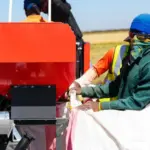
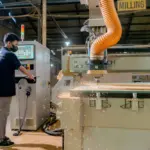
In a world where food security and efficiency sit at the forefront of agricultural innovation, humble grains like rice often go unnoticed in the spotlight of technological advancement. Yet, beneath the surface of traditional practices lies a burgeoning revolution in rice processing equipment—an advancement that promises to streamline supply chains and enhance agricultural efficiency in ways previously unimagined. “Beyond Boiling” invites readers to explore the intricate machinery and cutting-edge technologies that are transforming rice from field to table. As we delve into this journey, we uncover the unsung heroes of the agricultural sector, revealing how these advancements not only elevate the quality and consistency of rice but also contribute to a more sustainable and responsive food system. Join us on this exploration of the unseen forces reshaping agricultural landscapes and redefining our relationship with one of the world’s staple foods.
Rethinking Efficiency: The Overlooked Costs of Advanced Rice Processing Equipment on Small-Scale Farmers
While advanced rice processing equipment heralds a new era of efficiency,small-scale farmers often find themselves navigating a landscape littered with hidden costs. These costs extend beyond mere financial outlays; they encompass social and environmental dimensions that traditional analyses frequently overlook. As an example, initial investment costs can be prohibitively high for smallholders, often requiring loans that may strain their financial stability. Furthermore, as equipment maintainance and operational training become critical components of the operational framework, manny farmers may not possess the necessary technical knowledge, thus leading to increased reliance on external experts and service providers. This not only raises operating costs but can also create dependency that undermines the autonomy of local producers.
Moreover, the implicit trade-offs of adopting advanced technology deserve scrutiny. While these machines can significantly increase throughput and reduce post-harvest losses, they may also catalyze social changes that dilute traditional farming practices. Such as, the shift towards mechanization can threaten local employment, as fewer laborers are needed to meet processing demands. It’s crucial to weigh these implications against the supposed efficiency gains. To navigate this delicate balance, small-scale farmers should consider a phased approach to technology adoption, integrating equipment incrementally while investing in complementary skills training and community engagement. This strategy not only preserves local expertise but also fosters an adaptive learning environment that aligns technological advancements with the needs of the farming community. By remaining vigilant about the broader costs associated with mechanization, farmers can leverage these innovations without sacrificing the fabric of their agrarian systems.
Shattering Myths: why High-Tech Solutions Might Not Be the Answer to Sustainable Rice Production
While high-tech solutions in rice production often promise increased efficiency and yield, they are not a panacea. One critical myth revolves around the assumption that advanced technological interventions will universally elevate productivity across diverse agricultural contexts. in reality, the effectiveness of these technologies can be contingent upon several factors, including local agronomic practices, climate adaptability, and socio-economic conditions.For instance, deploying sophisticated machinery in regions where labor is abundant and affordable could be counterproductive, disrupting traditional practices that have stood the test of time. This raises pertinent questions regarding the trade-offs involved:
- Cost vs. Accessibility: Advanced equipment frequently enough comes with high initial investments, making it inaccessible for smallholder farmers.
- Tech Dependency vs. Knowledge Transfer: Overreliance on technology may inhibit local knowledge transmission, crucial for sustainable practices.
- Yield vs.Resilience: High yield does not equate to sustainability; techniques that undermine soil health can jeopardize long-term productivity.
Additionally, the assumption that all farmers can seamlessly integrate these innovations ignores a vital diverse agricultural ecosystem. It inadvertently sidelines the importance of tailored solutions that consider local needs and capacities. A nuanced advice is to adopt a hybrid approach, which combines technology with traditional agricultural wisdom. Establishing partnerships between tech developers and local farmers can facilitate co-created solutions that are both innovative and contextually relevant. This collaborative effort could lead to a more sustainable rice production model that respects and utilizes the strengths of both high-tech advancements and local practices.
Supply Chain Paradox: Balancing Innovation with Tradition in rice Processing Methods
The rice processing sector faces a notable paradox: while innovation in machinery and techniques holds the promise of significant efficiency gains, staying anchored in traditional methods remains essential for many producers, especially in regions where agrarian customs are deeply rooted. Traditional rice processing, often perceived as inefficient, offers distinct benefits such as flavor profile consistency and cultural relevance. In contrast, advanced processing technologies, such as automatic huskers and multi-functional milling machines, are designed to maximize yields and minimize waste. However, the trade-offs associated with these advancements are significant. As an example:
- Cost of Adoption: High initial capital investment may deter small-scale farmers, driving a wedge between those who can access such technologies and those who cannot.
- Loss of Local Knowledge: Transitioning to advanced methods risks erasing valuable traditional knowledge that has been honed over generations.
- Market perception: Consumers may prefer rice processed using traditional methods, impacting sales for producers who shift solely to modern techniques.
As stakeholders navigate these waters, a nuanced approach is required. Integrating advanced technology with traditional practices may offer a balanced solution, allowing producers to enhance productivity while preserving the quality attributes that define their product. Such as, investing in hybrid systems that combine improved machinery with manual oversight can facilitate a smoother transition. This strategy acknowledges the value of both innovation and tradition, leveraging the strengths of each to forge a sustainable path forward in an industry frequently enough resistant to change. Continuous education and training programs can help bridge the knowledge gap, empowering farmers to adopt new practices without entirely abandoning their heritage.
The Hidden Trade-Offs of automation: Striking a delicate Balance Between Productivity and Quality in Rice Supply Chains
The rise of automation in rice supply chains, while promising enhanced productivity, necessitates a careful evaluation of its potential repercussions on quality.Critics frequently argue that increased mechanization, particularly in processes like milling and sorting, can lead to the degradation of critical quality attributes—such as grain integrity and taste—that are paramount in premium rice markets. However,this perspective overlooks the nuanced realities of technological integration. A smart approach to automation acknowledges that quality and productivity are not inherently at odds; rather, they represent two sides of a delicate balance. By categorizing processes and strategically implementing advanced equipment, stakeholders can optimize this balance, reaping the benefits of efficiency while safeguarding product standards.
- Prioritize Key processes: Focus automation investments on processes that entail high labor intensity and low variability, such as cleaning and sorting, where precision enhances overall quality without compromising texture or flavor.
- Utilize Advanced Monitoring: Implement real-time quality monitoring systems alongside automated processes. This can maintain quality control while benefiting from increased throughput, ultimately ensuring that only superior products reach consumers.
- invest in Training: Equip human operators with robust training on technology use, reinforcing the idea that machinery should augment human expertise rather then replace it. The synergy can lead to consistent quality assurance.
Moreover, it’s essential to reassess the assumption that traditional farming practices always guarantee higher quality. While organic and artisanal methods have their merits, they cannot universally be considered superior. A shift towards precision agriculture could allow for tailored interventions that enhance quality metrics—such as nutrient profiles and pest resistance—potentially surpassing conventional methods. Thus,as stakeholders navigate the complexities of automation in rice supply chains,fostering an innovative mindset that embraces technology while honoring the subtleties of quality can lead to a more resilient and efficient agricultural ecosystem. Emphasizing such a holistic approach not only challenges the binary of productivity versus quality but also positions stakeholders to thrive amidst a rapidly transforming agricultural landscape.
Insights and Conclusions
In a world where efficiency and innovation reign supreme, the evolution of rice processing equipment serves as a testament to humanity’s relentless pursuit of progress. As we navigate the complexities of global supply chains,advanced technologies are breaking the mold,enhancing not only the quality of our food but also the sustainability of our practices. From farm to table, the journey of rice has transformed from a simple act of boiling to a sophisticated dance of precision and efficiency, driven by ingenuity.
As we look ahead,it’s clear that these advancements are not just changing how we process rice; they are setting the stage for a broader revolution in agriculture. The stories of those who toil in the fields, frequently enough unsung, are now being echoed through the efficiencies created by cutting-edge machinery and innovative practices. By embracing these changes,we can not only elevate the livelihoods of farmers but also contribute to a more resilient and sustainable food system.
As we conclude our exploration of this dynamic intersection between technology and agriculture, let us reflect on the profound impact that these innovations hold. The next time you savor a bowl of perfectly cooked rice,remember the journey it undertook—from advanced processing methods to improved supply chain logistics. The future of agriculture is indeed luminous, and with every grain, we are reminded that progress, like rice, is best savored in its many forms.