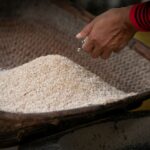
In the intricate world of agricultural processing, the journey from paddy to polished rice is one marked by innovation, precision, and a relentless pursuit of efficiency. As global demand for rice continues to surge, the importance of optimized paddy processing units has never been more pronounced. This article delves deep into the heart of these vital units,exploring the specifications that define their capabilities,the performance metrics that gauge their effectiveness,and the operational considerations that underpin successful processing. By examining the latest technological advancements and their impact on productivity, we aim to illuminate the path toward enhanced efficiency in paddy processing, revealing how modern techniques can transform agricultural yields and support enduring practices in an ever-evolving market landscape. Join us as we navigate the complexities and opportunities within paddy processing, equipping stakeholders with the insights needed to thrive in a competitive environment.
Innovative Mechanisms: Dissecting the Engineering of Paddy Processing Machinery
Paddy processing machinery incorporates a range of innovative mechanisms that enhance efficiency and reduce operational costs. Key systems include the pre-cleaning unit, which utilizes a series of screens and air jets to remove large debris such as straw, dirt, and stones before rice milling. The husking machine employs rubber rolls to gently crush paddy grains, separating the husk while minimizing kernel damage. Later, whitener and polisher units utilize a combination of abrasive materials and airflow for effective removal of bran layers, ensuring high-quality white rice with minimal loss. Specifications often dictate that these machines operate at various throughput levels, commonly ranging from 1 to 25 tons per hour, depending on the scale of the processing unit and the desired polish level.
Performance metrics for these processing units hinge on several criteria: efficiency ratios, percentage of whole grains, and energy consumption rates. as an exmaple, a well-tuned milling unit might achieve an efficiency rate of over 70%, meaning that a significant portion of the processed grains emerge as intact kernels.However, comparative analysis reveals limitations in older models, often plagued by excessive kernel breakage and higher energy consumption. In contrast, modern automated systems incorporate sensors and AI-driven analytics to monitor and adjust processing conditions in real-time, optimizing throughput while minimizing energy usage. Notably, maintaining moisture content during processing is crucial, as it affects grain hardness and subsequent yield quality. As such, an integrated monitoring system is increasingly seen as a necessary specification within advanced paddy processing machinery.
Performance Standards: Evaluating Efficiency Metrics in Modern Paddy Processing Operations
Evaluating efficiency metrics in modern paddy processing operations involves a comprehensive analysis of several key performance standards. throughput capacity is one of the primary metrics, defined as the volume of paddy processed per unit of time, typically measured in tons per hour (TPH). this metric directly correlates with the setup of machinery such as rice mills, which frequently enough operate with an efficiency range of 60-80%. Comparing the output of modern automated mills against traditional manual processing units highlights significant advancements in processing speed and volume efficiency. Additionally, operational efficiency can be assessed through the yield percentage, which indicates the proportion of processed rice compared to the total weight of paddy input. High-performance mills achieve yield percentages of around 68%-70%, while traditional methods may yield only 55%-60%. Factors affecting yield include milling technique, equipment maintenance, and the moisture content of the paddy, requiring processors to fine-tune parameters for optimum performance.
Another critical performance factor is energy efficiency, often analyzed through the energy consumption per ton of processed paddy. Modern paddy processing units aim for an energy usage threshold of 30-40 kWh per ton, while older technologies can exceed 80 kWh. Complex machinery with inverter technology and sensor-based controls provides real-time adjustments that enhance energy savings. Moreover,downtime metrics—including both scheduled maintenance and unplanned outages—are vital for comprehensive operational assessment. Reliable operations often maintain less than 5% downtime, while equipment failure can significantly disrupt processing schedules. To help visualize these metrics, performance comparisons can be illustrated in the following table:
| Performance Metric | Modern Mills | Traditional Methods |
|---|---|---|
| Throughput capacity (TPH) | 10-15 | 1-3 |
| Yield Percentage | 68%-70% | 55%-60% |
| Energy consumption (kWh/ton) | 30-40 | 80+ |
| Downtime Percentage | <5% | 10-20% |
Understanding these metrics assists processors in optimizing their operations, identifying bottlenecks, and implementing technologies that align with their performance goals while addressing any limitations inherent in the processing setup.
Material Science and Design: Enhancing Output Quality in Paddy Processing Units
Material science plays a pivotal role in enhancing the output quality of paddy processing units by optimizing the selection and treatment of materials used in machinery and equipment. Key mechanisms include the application of wear-resistant coatings on surfaces that come into direct contact with paddy grains. As a notable example, the usage of ceramic and carbide composites can significantly reduce wear during milling operations, which in turn mitigates grain breakage. Specification criteria for these materials frequently enough revolve around factors such as hardness, toughness, and corrosion resistance, which can be quantitatively assessed using standards like the Mohs scale for hardness or ASTM G65 for wear resistance. The perfect material selection can thus enhance the durability of the milling equipment and maintain consistent output quality.
Moreover, the design of processing units is critically linked to optimizing flow dynamics, which can impact the overall efficiency of paddy processing. Such as, the incorporation of modular designs facilitates easy modifications and scalability as per processing needs, enhancing the adaptability of the unit while maintaining throughput. Performance metrics such as throughput rate, grain recovery percentage, and energy consumption ratios provide a clear indication of operational efficiency. Comparing various designs through a matrix format helps identify potential weaknesses and strengths in processing setups:
| Design Type | Throughput Rate (kg/h) | Grain Recovery (%) | Energy Consumption (kW/kg) |
|---|---|---|---|
| Traditional Milling | 500 | 65 | 0.5 |
| High-Efficiency Mill | 800 | 75 | 0.4 |
Despite the benefits offered by advanced materials and innovative designs, limitations such as initial costs, maintenance complexity, and operator training needs cannot be overlooked.Implementing high-performance materials can lead to higher upfront investments, which may deter smaller operators. Furthermore, equipment should be maintained regularly to ensure optimal performance, necessitating a qualified workforce with adequate training to manage sophisticated machinery effectively. Addressing these challenges is essential for paddy processing units seeking to enhance output quality while remaining cost-efficient.
Comparative Analysis: Benchmarking Technological Advancements in Paddy Milling Techniques
The advancement of paddy milling technologies can be benchmarked against several performance metrics including rice recovery rate, milling efficiency, energy consumption, and the overall quality of the rice produced.Key mechanisms of these processes involve various types of milling systems such as traditional, modern, and fully automated milling units. For instance, traditional milling often relies on simple mechanical hulling methods that yield lower recovery rates, whereas modern systems like the paddy-to-rice milling system utilize advanced machinery such as pre-cleaners, rice hullers, and whirlwind separators to enhance efficiency. The comparison of these technologies can be illustrated through the following specifications:
| Technology Type | Recovery Rate (%) | Energy Consumption (kWh/ton) | quality Factors |
|---|---|---|---|
| Traditional Milling | 60-65 | 120 | Lower head rice yield,higher broken grain |
| Modern Milling | 70-75 | 90 | Higher head rice yield,minimal broken grain |
| Automated Milling | 75-80 | 70 | Best quality,optimal rice texture |
Operational considerations such as plant scale,labor availability,and technology adoption costs also play critical roles in determining the feasibility of these systems. The limitations in traditional milling methods frequently enough include inability to adapt to varying paddy qualities and the lack of precision in controlling processing parameters, which can severely impact the end product’s quality. For example, modern systems tend to incorporate process logic controls, which allow real-time adjustments to moisture content, temperature, and milling speed, maximizing recovery rates and minimizing energy input. Key performance factors must be examined on a case-by-case basis, where the installation of automated sorting and quality assurance technologies can greatly benefit larger-scale operations looking to meet export standards, while smaller units might prioritize low initial capital expenditures and ease of maintenance.
In Summary
In the ever-evolving landscape of agricultural technology, the role of efficiency in paddy processing units cannot be overstated. As we’ve explored throughout this article, the intricate dance between specifications, performance metrics, and operational considerations reveals a tapestry of innovation that defines modern rice processing.
From advanced milling techniques to automated sorting systems, the integration of cutting-edge technology not only enhances yield but also contributes to the sustainability of rice production as a whole. As we look ahead, it is clear that continued investment in these technologies will play a pivotal role in addressing global food security challenges while fostering economic growth within the agricultural sector.
We invite stakeholders—be they farmers, engineers, or policymakers—to reflect on the insights shared here and to consider their implications in shaping the future of paddy processing. By embracing efficiency as both a goal and a guiding principle, we can pave the way towards a more productive, resilient, and responsible agricultural framework. The journey of innovation in paddy processing has only just begun, and the future holds remarkable promise for those willing to evolve with it.