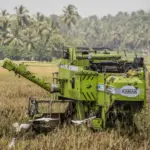
In the lush, verdant fields of Asia, where traditions run as deep as the roots of the rice plants themselves, a silent transformation is taking place. “Harvesting Tomorrow: The Untold Journey of rice Machinery amidst Tradition and Innovation” ventures into the heart of this evolution,where age-old practices are being reimagined through cutting-edge technology. As farmers work diligently to meet the demands of a growing population, the marriage of time-honored methods and modern machinery charts a new course for the future of rice cultivation. this article explores the delicate balance between preserving cultural heritage and embracing innovation,revealing the stories of those who are at the forefront of this agricultural renaissance. Join us as we unravel the layers of this rich narrative, showcasing not just the machines that help harvest the staple of life but also the spirit of resilience and creativity that drives an entire industry forward.
Bridging Generations: The Handshake Between Age-Old Practices and Modern mechanization
In the lush fields of rural asia, the age-old practice of rice cultivation brings together generations of farmers who have devoted their lives to this staple grain. Take, for instance, mr. Tan, a rice farmer in Vietnam. he inherited his father’s farmland, where cultivation methods have remained largely unchanged for decades. Each day, he reminisces about his father’s hands, calloused and skilled, working the rice paddies with care. Yet, as climate change wreaks havoc and labor shortages become more pronounced, Mr. Tan faces a pivotal decision: cling to tradition or embrace modern mechanization. The arrival of a rice harvester into his village ignites both excitement and skepticism among his fellow farmers. As they gather to witness its first operation, they reluctantly acknowledge the machine’s efficiency—a stark contrast to the weeks it usually takes to harvest with their conventional methods.
Many farmers, like Mr. Tan, find themselves at a crossroads where adapting to change could mean the difference between sustenance and survival. After the initial demonstration, he spends sleepless nights weighing his options. Will he risk losing the cultural heritage passed down through generations? Yet, the harsh realities are undeniable. When a neighboring farm adopts mechanization, they report a 40% increase in yield and a reduction in labor costs—factors that resonate deeply with Mr.Tan’s growing family. To illustrate this shift, consider the following table of outcomes:
| Method | Time to Harvest | Labor Cost | Yield per Hectare |
|---|---|---|---|
| Traditional | Weeks | High | 2.5 tons |
| Mechanized | Days | Low | 3.5 tons |
This crossroads leads to a deeper lesson about embracing innovation while respecting tradition—an intricate dance of balancing values with needs. Mr. Tan’s story is not just about his decision-making but reflects a broader narrative across the agricultural landscape, as farmers grapple with how best to honor their heritage while ensuring the future of their families and communities.The handshake between age-old practices and modern mechanization tells a story of resilience, necessary adaptations, and the hopeful pursuit of sustainability in agriculture.

Navigating the Fields: Stories from Farmers Who Embrace Change Amidst Cultural Roots
In the small village of Banswara, nestled between the emerald-green rice paddies, farmer Arjun stood on the edge of his field contemplating a decision that could alter the course of his family’s farming legacy.For generations, his family had relied on traditional methods, painstakingly tilling the land and harvesting with hand tools. However, rising labor costs and unpredictable weather patterns prompted him to consider a leap of faith into the realm of rice machinery. That spring, equipped with a second-hand combine harvester, Arjun faced the daunting challenge of balancing his family’s cultural attachment to traditional practices with the need for increased efficiency. The first week of using the harvester was fraught with complications; *the machine broke down multiple times*, and Arjun experienced moments of doubt when he weighed the machine’s cost against the loss of age-old rituals during harvest time. Yet with each passing day, he realized that embracing this change was not just about boosting yield but also about preserving a future for his children in agriculture.
Across the fields, another farmer, Meena, faced a different but equally profound moment of transition. She had spent years following traditional rice cultivation methods passed down through generations. But when her yield started shrinking due to soil depletion, Meena decided it was time to invest in *sustainable practices* and modern irrigation technology. With her husband’s initial skepticism dawdling in her mind, she took the plunge by converting her entire farm to drip irrigation. The first few months were nerve-wracking as they navigated initial failures and adjustment periods. Yet,by the end of the season,her yields had *increased significantly*,and the water savings had dropped their costs considerably. The most transformative moment came during the annual village festival.As she proudly displayed her bountiful harvest, her neighbors began to approach her not just for advice but as a respected source of knowledge, bridging the gap between generations and igniting conversations about blending tradition with innovation. through these personal narratives, we witness how farmers like Arjun and Meena navigate the crossroads of their cultural heritage and the pressing need for modern agricultural practices.
Engineering Resilience: How Innovation is Redefining Rice Harvesting in Challenging Climates
The landscape of rice harvesting is transforming rapidly, driven largely by the innovations developed in response to the unpredictable climates farmers face today. Such as, imagine a small family farm in Southeast Asia, where seasonal monsoon rains used to dictate the calendar for planting and harvesting. This reliance on traditional weather patterns often led to disappointment, as erratic rainfall turned what should have been a bountiful harvest into a struggle for survival. Enter the new technology of drone-assisted field management. Farmers like Rina, who previously relied on guesswork to determine the optimal harvesting time, now use drones equipped with multispectral sensors to monitor crop health and moisture levels. This innovation has allowed her to harvest her crop during the brief windows of ideal conditions, maximizing yield while minimizing post-harvest losses.
However, transitioning to modern techniques isn’t without its challenges. When the community introduced a new line of automated rice harvesters, expectations were high.Farmers anticipated a reduction in labor costs and increased efficiency.Yet, when the machines first arrived, shiny and sleek, many found that they struggled to operate effectively in their uneven fields.The result was frustration and a temporary setback. Working closely with agricultural engineers and equipment suppliers, the community held workshops to adapt the machinery, teaching farmers how to modify their harvesting strategies and implement precision farming techniques tailored to their unique landscapes. As a result, expectations began to align more closely with reality, demonstrating a vital lesson: innovation is not just about adopting new technologies but also about fostering a culture of collaboration and adaptability. The contrasts between initial resistance and eventual acceptance highlight the resilience of farmers willing to embrace change, turning challenges into growth opportunities in their enduring journey with rice cultivation.
Lessons from the Land: Transforming Tradition into Sustainability in Rice Agriculture
In the heart of rural Asia, the transition from traditional to sustainable rice farming frequently enough unfolds in unexpected ways. Take, for example, a small village in northern Thailand where farmers have relied on age-old practices passed down through generations. Each monsoon, the low-lying fields are flooded, and the rhythms of planting and harvesting echo the legacy of their ancestors. This year, however, confronted by the challenges of climate change and diminishing yields, a group of farmers convened to explore alternatives. They weighed the expectations of immediate results against the realities of modern agricultural practices. After much deliberation, they decided to experiment with System of Rice Intensification (SRI), a method emphasizing fewer seeds and reduced water usage. The farmers hesitantly weeded out their old ways,sowing seeds with care and revisiting their understanding of soil health. To their surprise, not only did their yields improve, but they also noted enhanced resilience against heavy rains and droughts.
Lessons from this village extend beyond mere agricultural techniques; they resonate deeply in the broader narrative of sustainability. Similarly, in India, a cooperative of rice producers faced refusal to embrace mechanization, fearing the transition woudl strip their community of its rich traditions. Yet,during a particularly labor-intensive harvest season,the choice became clear when several farmers fell ill from exhaustion. This pivotal moment ignited discussions about integrating tractors and reapers without losing their cultural identity. They drafted a community agreement to adopt machinery but preserved aspects of their harvest rituals by scheduling traditional ceremonies around the mechanized work. The result was a balanced approach, merging the vibrancy of tradition with the efficiency of modern technology. In both cases, the farmers emerged with profound insights into adaptability and collective decision-making, illustrating that sustainability is not merely a choice, but a journey shaped by community resilience.
Closing Remarks
As we draw the curtain on this exploration of “Harvesting Tomorrow: The Untold Journey of Rice Machinery Amidst Tradition and Innovation,” it becomes clear that the tale of rice machinery is one woven from both time-honored practices and groundbreaking advancements.The machinery, much like rice itself, is deeply rooted in the cultures and communities it serves, embodying a delicate balance between reverence for age-old traditions and the relentless pursuit of innovation.
As we stand at the intersection of these two worlds, it is evident that the future of rice harvesting lies not in a single path but in the symbiotic relationship between what has been and what is yet to come.From the rhythmic movements of the combine harvester to the intricate designs of traditional hand tools, each element tells a story—of resilience, adaptation, and hope.
In a world that is continuously evolving, our approach to agriculture must also adapt, fostering a dialog between the past and the future. As we embrace new technologies and methodologies, let us not forget the lessons learned from generations before us. By doing so, we can ensure that as we harvest the crops of tomorrow, we also nurture the traditions that have sustained us thus far.
In this ongoing journey,may we cultivate a sustainable future that honors both the seeds of our heritage and the innovations that will feed the world for generations to come. The journey of rice machinery is far from over; it is a vibrant narrative that continues to unfold, inviting all of us to take part in shaping the legacy of our agricultural heritage.