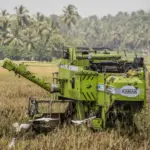
In a world where the shadows of hunger adn malnutrition continue to loom large, the pursuit of innovative solutions has never been more crucial. At the heart of this battle lies one of humanity’s oldest staples: rice. Spanning cultures and continents, rice has sustained populations for centuries, yet its production and processing methods have frequently enough remained rooted in tradition. Today, however, a new wave of cutting-edge rice processing plants is emerging, poised to redefine the landscape of global food security. By harnessing technology and innovative practices, these facilities are not just modernizing the way rice is processed; they are paving the way for greater efficiency, sustainability, and resilience in the face of an ever-changing climate. This article delves into how these revolutionary advancements are transforming rice cultivation,enhancing nutritional value,and ultimately,reshaping the future of food security around the globe. Join us as we explore the intersection of tradition and innovation, revealing the potential of rice processing to nourish the world.
Unpacking the Promise and Perils of Modern Rice Processing Technologies in Sustainable Agriculture
Modern rice processing technologies hold great promise for the future of sustainable agriculture, yet their integration into rice production systems requires careful consideration of both potential benefits and inherent challenges. On the one hand, advanced processing techniques can considerably enhance yield quality and reduce post-harvest losses, leading to improved food security. For instance, high-efficiency rice millers can ensure minimal breakage while maximizing the extraction of bran and husk, transforming these by-products into valuable resources for animal feed, biofuels, and other applications. However, these technologies often come with substantial initial investments, wich can exclude smallholder farmers lacking access to financing. This creates a dichotomy where affluent growers benefit disproportionately, potentially widening the socioeconomic gap within rural communities.
Moreover, while the efficiency of modern processing plants secures higher output, it may inadvertently encourage monoculture practices that threaten agro-biodiversity. In contrast to customary rice-growing methods that promote diverse cropping systems, reliance on high-tech processing could encourage uniformity, leading to vulnerability in the face of climate change. To navigate these trade-offs, stakeholders in the agricultural sector should prioritize a balanced approach. Policy recommendations may include incentivizing investments in technology that complement traditional methods, such as agro-ecological practices that preserve biodiversity:
- Subsidies for eco-friendly technologies: Support innovations that strengthen soil health while ensuring community access.
- Training programs for smallholders: Empower local farmers to leverage modern processing without sacrificing traditional practices.
- Collaborative funding models: Encourage partnerships between governments, NGOs, and the private sector to democratize access to processing technologies.
By fostering inclusive strategies that also respect the delicate balance of ecosystems, rice processing innovations can contribute meaningfully to sustainable agricultural practices without undermining rural communities or environmental health.

Beyond Efficiency: Navigating the Social and Economic Implications of Advanced Rice Mills
The integration of advanced rice mills ushers in profound changes that extend beyond operational efficiency, affecting the socio-economic landscape in diverse ways. While these facilities promise increased output and reduced labor costs, they also alter traditional farming practices, potentially displacing smallholder farmers who lack the capital to invest in modernization.The challenge lies in finding a balance between innovation and tradition; stakeholders must consider measures to mitigate the negative impacts on local economies. as an example, investment in training programs can equip small farmers with the skills required to operate or engage with high-tech milling equipment. By empowering them, we foster a partnership rather than a dichotomy between traditional methods and modern advancements.
Furthermore, the environmental implications of advanced rice mills necessitate careful examination. While these facilities can streamline processing and reduce waste, they often demand meaningful water and energy inputs, challenging the sustainability narrative. Policymakers should prioritize promoting environmentally friendly technologies, such as solar-powered mills or water-efficient systems. On the economic front, the positive externalities generated by these mills—such as job creation in rural areas—should not be understated. Though, the benefits must be thoughtfully weighed against the risk of economic monopolization, where large corporations dominate the landscape and marginalize local businesses. An inclusive approach that encourages local ownership and investment, perhaps through cooperative models, can promote both economic growth and social equity, leading to a more resilient agricultural sector overall.
The Illusion of Abundance: How Innovation in Rice Processing Fails to Address underlying Food Insecurity
The advancements in rice processing technology—such as the introduction of milling machinery that increases yield and reduces waste—often create a perception of abundance.However, this illusion can obscure the underlying realities of food insecurity that persist in many regions dependent on rice. While innovations frequently enough promise to enhance productivity, they can inadvertently divert attention from the root causes of scarcity, such as:
- Economic Disparities: In many developing countries, improved processing facilities do not translate to accessible rice for impoverished populations due to systemic inequalities.
- Market Dynamics: Innovations that benefit large-scale producers might exacerbate the plight of smallholders who cannot compete with mechanized production.
- Sustainability Concerns: Rapid technological adoption can lead to environmental degradation, threatening long-term food security despite short-term gains in rice availability.
This disconnect underlines the necessity for a more holistic approach, one that balances innovation with equitable distribution and sustainable practices. Stakeholders in the agricultural sector must consider strategies that not only improve rice processing but also address the underlying socio-economic and environmental challenges. This could take the form of:
| Strategy | Description |
|---|---|
| Inclusive Policy Design | Develop policies that support smallholder farmers alongside industrial advancements, ensuring benefits are widely shared. |
| Investment in Local Infrastructure | Focus on building local processing facilities that empower communities to add value to their crops without reliance on distant markets. |
By fostering a synergistic relationship between innovation and grassroots-level support, the notion of abundance in rice production can transition from a mere illusion into a tangible reality that fortifies global food security.
Rethinking Tradition: Balancing Modernization with Cultural Practices in Global Rice Production
The intersection of modernization and cultural practices in global rice production is fraught with both opportunities and challenges. As innovative rice processing plants incorporate cutting-edge technology, the risk of losing centuries-old traditions grows.However, a deeper understanding of these cultural practices can lead to a more integrated approach that respects local customs while embracing progress. For instance, consider the following points:
- Local Knowledge and Biodiversity: Traditional farming methods have contributed to the rich biodiversity of rice varieties. In modernizing rice production, it is indeed crucial to ensure that these local varieties are not overshadowed by uniform, high-yield strains.
- Economic Constraints: Many smallholder farmers rely on traditional practices due to limited access to capital or technology. Innovative processing plants must balance technological advancement with financial accessibility, offering scalable solutions that accommodate diverse farming systems.
To achieve this balance effectively, it is indeed essential to foster collaboration between technologists and local communities. Rather of imposing solutions, engaging farmers in decision-making can ensure that innovations are contextually appropriate and culturally sensitive. For example, adapting technologies such as community-based milling facilities can enhance efficiency without disrupting existing practices. This involves identifying trade-offs between short-term productivity gains and long-term sustainability of cultural heritage. It also requires nuanced recommendations that prioritize inclusivity:
- Training and Education: Invest in programs that not only teach modern techniques but also showcase how these can coexist with traditional methods.
- Policy Support: Advocate for policies that protect local farming practices while incentivizing sustainable innovation in rice processing.
Key Takeaways
In a world where food security hangs in the balance, the innovations within rice processing plants symbolize a profound shift in our approach to one of humanity’s most essential crops. As we witness the blending of age-old traditions with cutting-edge technology, it becomes clear that the future of food lies at the intersection of sustainability and efficiency. These revolutionary facilities not only enhance yield and reduce waste but also improve nutritional quality and accessibility for millions around the globe.
As we move forward, the journey of transforming rice processing is emblematic of a larger narrative—one that embraces change while honoring the histories that brought us here. By investing in innovation, we are not just addressing immediate needs but are also paving the way toward a resilient and equitable food system for generations to come. In this unfolding story,every grain tells a tale of hope and possibility,reminding us that with creativity and collaboration,we can reshape our world for the better.Let us carry this momentum forward, fostering a future where food security is not just a goal but a reality for all.