From Seed to Harvest: The Unseen Heroes of Rice Farming and the Machinery That Transforms Lives
In the gentle embrace of lush green paddies, the world’s most crucial staple begins its remarkable journey—from a diminutive seed to a nourishing bounty. Rice, a lifeline for billions, is more than just a grain; it embodies the dedication, resilience, and ingenuity of countless farmers working tirelessly across the globe. Yet, behind the scenes of this age-old agricultural practise lie not only the diligent hands that sow and reap but also the intricate machinery that revolutionizes the process. This article delves into the symbiotic relationship between farmers and technology, illuminating the often-overlooked heroes of rice farming. Join us as we explore the transformation of lives through innovation and commitment, revealing how this delicate crop sustains economies and nurtures communities from the soil to the dining table.
Tending to the Soil: The Lifelong Commitment of Small-Scale Rice Farmers
Tending to the soil is not merely about planting seeds; it requires a deep-rooted commitment that intertwines the farmer’s life, culture, and the surrounding ecosystem. Take, as an example, Maria, a small-scale rice farmer in the lush valleys of central Vietnam. Each spring, as Maria looks out over her fields, she knows that the health of her soil directly affects the vitality of her harvest. Over the years, she has integrated conventional practices with modern sustainability techniques. This means rotating her crops, using organic fertilizers made from local materials, and practicing minimal tillage to preserve soil structure. With each decision, Maria ages like fine wine, learning that the intuition to read the land comes gradually, shaped by seasons of both success and failure. When heavy rains washed away much of her rice last year, she didn’t just see the loss; she understood she needed to reconsider her water management techniques. this lesson, though harsh, propelled her toward innovations that would safeguard her field in the future.
Every farmer like Maria also faces a constant tug-of-war between expectations and the stark realities imposed by nature.Consider her neighbor, Chen, who expected to yield a bumper crop this season based on last year’s results.Chen focused solely on high-yield input, neglecting the organic matter that nourished his soil. When the harvest arrived, he was dismayed to find that the quality of his rice was inferior, and the market responded with lower prices. Contrasting Chen’s experience with Maria’s, who understands that investing in the soil is a long-term strategy, highlights the importance of patience and adaptability in farming.Farmers learn to see their fields not just as patches of earth but as living systems that require nurturing to thrive. As they stand in their rice paddies, their hands deep in the soil, they cultivate not only rice but also the wisdom of generations, understanding that each season brings new challenges and opportunities for growth.

Navigating Climate Challenges: Resilience in the Face of Uncertainty
In the heart of rural Vietnam, a small farming community grapples with the unpredictability of shifting weather patterns brought on by climate change. after years of planning their planting schedules around traditional lunar cycles, farmers like Minh found himself in a situation where prolonged drought followed by intense rainfall threatened to ruin crops. Faced with this new reality,Minh and his neighbors convened to discuss alternative strategies. They realized the importance of diversifying their rice varieties. Instead of solely relying on their usual high-yield strains, they experimented with drought-resistant varieties and traditional heirloom types. This unexpected turn not only bolstered their resilience against the forces of nature but also enriched the local biodiversity—the once uniform green fields became a vibrant tapestry of colors and textures, serving both as insurance against climate extremes and as a step towards restoring their cultural heritage.
The transition wasn’t without its hurdles. When the monsoon season unexpectedly hit, many farmers initially panicked, fearing that their new approaches would falter. Unexpectedly, though, those who had diversified their crops found that some of their fields thrived while others struggled, illustrating the stark contrast in outcomes. For instance,mai,a neighbor who had steadfastly clung to single-variety farming,lost nearly her entire crop to flooding. In contrast, Minh observed how his mixed varietals fared; while some where submerged, others survived and even supported local bee populations, resulting in increased pollination for future cycles. These experiences cemented a vital lesson for Minh’s community: flexibility and adaptation in farming practices are crucial not only for immediate survival but also for future sustainability. Embracing uncertainty, the farmers learned to make more informed decisions, proving that resilience is rooted in collaboration, learning, and willing to embrace change.
Innovation in the Fields: How Technology is Revitalizing Traditional Practices
In the heart of rural Vietnam, Nguyen, a third-generation rice farmer, once depended heavily on traditional farming methods that had been passed down through his family for decades.Each planting season was a labor-intensive journey filled with uncertainty, as he navigated unpredictable weather patterns and pests that could wipe out his entire crop. However, when Nguyen discovered the power of technology, he began to see a transformation. By integrating a small drone into his practices, he was able to monitor his fields from above, identifying areas that needed extra care or where pests had started to take hold. With this real-time data, Nguyen could make informed decisions and apply resources more efficiently, leading to a 20% increase in his overall yield. What he initially viewed as a luxury became a necessity for survival, showcasing the life-changing potential of technology in traditional farming.
This shift isn’t isolated to Nguyen. Across countries such as India and the Philippines,farmers are experiencing similar revitalization through technological innovation. Take Priya, as an example, who transitioned from hand planting to utilizing a seed drill that allowed her to plant rice seeds evenly and at optimal depths, significantly reducing seed loss and improving germination rates. Thanks to this advancement, she reclaimed valuable time that she could dedicate to educating her children. Challenges remain, though; not all farmers have immediate access to these technologies, creating a sharp divide between those who can invest and those who cannot.Yet, for many, the introduction of such tools has fostered a community of knowledge-sharing, where farmers gather to share insights and experiences, turning competition into collaboration. The lesson here isn’t just about technology improving yield; it’s about how it transforms the very fabric of rural life, enhancing community ties while securing a more lasting future.
Harvesting Change: The Ripple Effects of Rice Farming on Communities and Economies
In rural communities across Asia and africa,the impact of rice farming extends far beyond the fields.Take, for instance, the story of Meera, a rice farmer in Tamil Nadu, India. For years, she managed a small plot inherited from her parents, focusing solely on subsistence farming. However, after participating in a cooperative program that introduced modern farming techniques and machinery, her yield nearly doubled within a single season. This shift was not just about increasing her harvest; it had a snowball effect on her entire community. With the extra income, Meera was able to invest in her children’s education, enhancing their future prospects. She also employed neighboring villagers for harvesting, effectively creating new jobs. As Meera shared her story during community meetings, her success inspired others to embrace change, demonstrating how collective progress can foster an environment of hope and transformation.
Contrastingly, the experience of ahmed, a farmer from Senegal, highlighted the challenges and rewards of adapting traditional practices to modern demands. Initially skeptical of introducing mechanization, he witnessed escalating labor costs and unpredictable weather patterns affecting his yield. A pivotal moment came when he decided to lease a small tractor, which allowed him to cover more ground and improve his planting schedule. What Ahmed didn’t expect was how this decision would ripple through his village. With increased efficiency, he harvested enough rice to not only feed his family but also supply to the local market. The prices surged, and soon local traders began to visit his farm for bulk purchases. The unexpected rise in demand led to improved local prices for other farmers as well, showcasing how one farmer’s decision can uplift an entire economy. Through his journey, Ahmed realized that change requires a willingness to embrace uncertainty and a commitment to sharing the knowledge gained with others—a lesson vital for sustainable community growth.
Final Thoughts
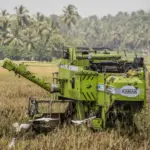
As we conclude our journey through the intricate world of rice farming, it is evident that the story of this staple grain extends far beyond the fields that cradle it. From the diligent hands of farmers nurturing seeds to the advanced machinery that revolutionizes the harvesting process, each element plays a vital role in ensuring that rice not only sustains millions but also transforms lives.These unseen heroes—the diligent farmers, the engineers crafting innovative tools, and the communities that come together to support sustainable practices—together shape an ecosystem that is both resilient and essential. Their synergy creates a tapestry of agricultural progress that not only addresses global food security but also empowers individuals and uplifts entire communities.
As we reflect on the journey from seed to harvest, let us appreciate the stories woven into each grain of rice—stories of labor, innovation, and hope. The next time you share a meal that includes rice, remember the unseen heroes who make it possible and the machinery that continues to forge a brighter, sustainable future for agriculture. In a world where challenges abound, their legacy serves as a reminder of the transformative power of collaboration and innovation in our quest for nourishment and sustainability.