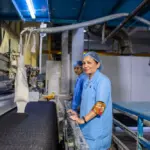
In the heart of agricultural landscapes, where golden fields of rice sway gently in the breeze, a silent revolution is taking shape. As the demand for rice continues to spike globally, innovative processing techniques are emerging, transforming the way this staple grain is cultivated, harvested, adn transformed. “From Grain to gold” delves into the cutting-edge rice processing equipment that is not just setting new industry standards but is also empowering small farmers to enhance productivity and profitability. With technological advancements redefining the boundaries of what’s possible, these innovations are fostering a new era of efficiency and sustainability in rice production—one that promises to uplift local economies and improve livelihoods. Join us as we explore the intersection of tradition and technology, where every grain holds the potential for wealth and empowerment.
Revolutionizing Rural Economies: The Double-Edged Sword of Innovative Rice Processing Technology
Innovative rice processing technologies have the potential to radically transform rural economies, yet this revolution is accompanied by a complex web of consequences. On one hand, the introduction of advanced processing equipment allows small farmers to increase yields, improve quality, and fetch higher market prices. As an example, technologies like automatic huskers and color sorting machines significantly enhance the efficiency and purity of rice production. Though, the rapid adoption of such technologies poses a challenge: the risk of widening the gap between early adopters and those who cannot afford these innovations.As income disparities increase, the socio-economic fabric of rural communities could face strains worse than before.Thus, stakeholders must carefully examine the implications of promoting advanced equipment in contexts where financial and educational barriers still abound.
Moreover, policies designed to support technological advancement should tread lightly, achieving a delicate balance between innovation and inclusivity. Instead of a one-size-fits-all approach,tailored interventions such as microfinancing options and training programs can empower farmers who lack the initial capital to invest in new tools. Creating cooperative models where resources, knowledge, and technology are shared among smallholders can yield a synergistic effect, ultimately enhancing collective bargaining power and market access.By considering such nuanced strategies, leaders in the agricultural technology sector can foster sustainable growth that supports all stakeholders without compromising the foundational livelihoods of small-scale farmers. Achieving this balance demands a holistic view that recognizes not just the potential profits of modern technology but also the critical importance of equitable access in reimagining rural economies.
Beyond Efficiency: The Unearthed Costs of Modern Rice Equipment on Traditional Farming Practices
While modern rice processing equipment offers undeniable efficiency and promises increased yield, it frequently enough comes at a significant cost to traditional farming practices. The rise of mechanization has pushed many small farmers to abandon age-old cultivation methods, leading to a loss of biodiversity and traditional knowledge. The assumption that efficiency directly correlates with improved livelihoods is misleading; rather, it may exacerbate inequalities within rural communities.For instance, smaller farmers may struggle to finance the high costs associated with advanced equipment, often becoming reliant on credit systems that can spiral into debt. This modern approach can strip away the communal practices that have sustained these farming communities for generations, turning vibrant agrarian cultures into machinery-dependent enterprises.
Moreover, the environmental implications of modern equipment cannot be overlooked. The emphasis on monoculture and mechanization has been linked to soil degradation and diminished water quality, ultimately jeopardizing the very land that sustains rice production. The following trade-offs should be considered:
- Short-Term Yield vs. Long-Term sustainability: While advanced machinery may increase immediate crop yields, the long-term effects on soil health and crop diversity could undermine future productivity.
- Economic benefits vs. Cultural Heritage: the leap toward mechanization might enhance economic metrics but at the cost of eroding cultural practices that connect farmers to their land.
To strike a balance between innovation and tradition, nuanced recommendations must guide small farmers. A mixed approach that incorporates technology while preserving traditional methods could enhance resilience. Innovations such as affordable, low-maintenance equipment tailored for smallholders or training programs that promote sustainable practices can help ensure that efficiency does not come at the expense of cultural integrity or environmental health.
Empowerment or Dependency? Examining the Long-Term Impacts of Advanced Rice Processing on Smallholder Resilience
The adoption of advanced rice processing equipment undeniably enhances productivity, yet it provokes a critical inquiry: does it empower smallholder farmers or inadvertently foster dependency? While these innovations promise increased yields and improved financial margins, they also risk solidifying a cycle of reliance on external technologies and capital. The allure of mechanization can oversimplify the complex realities faced by smallholders who may not have the resources for ongoing maintenance, training, or technological upgrades. Here, we must consider a nuanced approach:
- Empowerment: Introducing advanced equipment can greatly improve efficiency and quality, enabling farmers to access higher-value markets and premium prices. Incorporating local training programs can bolster their operational capacities and foster a sense of ownership over their production methods.
- Dependency: Over-reliance on specialized machinery might undermine traditional knowledge systems and local resilience. Farmers could find themselves trapped in a cycle of debt, compelled to keep purchasing cutting-edge technology that may not be sustainable in the long run.
To navigate these trade-offs effectively, stakeholders must prioritize sustainable practices that integrate local contexts and needs. Establishing cooperatives might provide a viable pathway for shared resources, enabling smallholders to benefit from processing technologies without the burden of individual ownership. Additionally, financing models should focus on long-term viability rather than short-term gains, ensuring that investments in technology coincide with training and community advancement.The end goal should not merely be the immediate uplift of incomes but rather fostering a resilient agricultural ecosystem where smallholders thrive independently, underpinned by their capacities and heritage.
The Illusion of Progress: Unpacking the overhyped Benefits of High-Tech Solutions in the Rice Industry
The rapid adoption of high-tech solutions in the rice industry is frequently enough celebrated as a leap towards modernization, yet this perspective may overlook significant nuances and hidden drawbacks. While innovative rice processing equipment promises enhanced yields and reduced labor costs, the actual benefits frequently remain overhyped. small farmers, who represent the backbone of the rice sector, may find themselves trapped in a cycle of debt rather than empowered by these advancements. Key factors contributing to this illusion of progress include:
- Investment vs. Return: The upfront costs of high-tech machinery can be prohibitive, leading farmers to take on burdensome loans.the promised increases in productivity do not always materialize, raising questions about the real long-term return on investment.
- Skill Gaps: Advanced equipment often necessitates technical skills that small farmers may lack, thereby creating a dependency on external expertise and limiting their control over farming processes.
- Environmental Impact: High-tech solutions can lead to increased resource consumption, such as water and energy, leading to sustainability concerns that can negate short-term efficiency gains.
Moreover, the assumption that technology uniformly elevates agricultural efficiency can blind stakeholders to the importance of context-specific strategies. For instance,not all regions have equal access to reliable electricity or the internet,which are crucial for the operation of high-tech processing machines. A nuanced approach that considers the diverse socio-economic backgrounds of farmers is essential to avoid exacerbating inequalities. Recommendations for a balanced path forward include:
- Incremental Introduction: Rather of an all-or-nothing approach, farmers should gradually adopt technology that aligns with their current practices and capacity.
- Training and Support: Establishing local training programs can help bridge skill gaps,empowering farmers to leverage technology without dependency.
- Holistic Assessment: Evaluating the environmental impact of new technologies on local ecosystems is crucial for sustainable adoption.
In Summary
As we conclude our journey through the transformative world of rice processing, it becomes clear that the evolution from grain to gold is not merely a metaphor, but a reality poised to uplift communities and inspire the future of agriculture. Innovative rice processing equipment is redefining industry standards, opening doors to enhanced efficiency, quality, and sustainability.
For small farmers, these advancements are more than just technological upgrades; they represent hope and possibility for a better livelihood. By harnessing the power of modern machinery and techniques, they can turn their hard work into tangible rewards, bridging the gap between traditional practices and modern demands.
As the agricultural landscape continues to evolve, it is indeed imperative that we support initiatives that empower farmers and promote sustainable practices. The path we tread today in the realm of rice processing will sow the seeds for a brighter, more prosperous tomorrow—one where every grain harvested holds the potential for golden futures. Together, we can cultivate an industry that not only thrives on innovation but also uplifts the very backbone of our food systems: the farmers who toil with passion and dedication. The journey from grain to gold has just begun,and its potential is boundless.