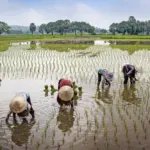
In an ever-evolving world, where the specter of food insecurity looms large, innovation takes center stage as the catalyst for change. among the silent crusaders in this arena are parboiled rice processing plants, transforming the humble grain into a powerhouse of nutrition and resilience. Beyond the boil lies a compelling story of how advanced processing techniques not only enhance the quality and shelf-life of rice but also empower communities, support sustainable farming practices, and pave the way toward a more stable food future. This article delves into the intricate world of parboiled rice processing, exploring its pivotal role in revolutionizing food security and highlighting its contributions to sustainability. Join us as we uncover how this age-old staple is being reimagined for a modern era, one grain at a time.
Transforming Grains: The Unexpected Environmental Impact of Parboiled Rice Processing
The processing of parboiled rice, often lauded for its benefits to food security and nutritional value, reveals a nuanced environmental impact that goes beyond the surface. While the parboiling process enhances the grain’s durability and taste, it also requires considerable water usage and energy consumption, especially in steam generation. These factors create a trade-off: the environmental costs associated with resource-intensive processing can offset the benefits of improved food security. For instance, parboiling can lead to water wastage if not managed sustainably. Facilities that lack efficient water treatment can contribute to local water scarcity, disproportionately affecting surrounding communities reliant on those very resources. Key considerations include:
- Implementing water reclamation systems to minimize waste
- Adopting renewable energy sources for processing operations
- Enhancing energy efficiency to reduce greenhouse gas emissions
Moreover, the broader ecological implications of parboiled rice processing extend to land use and agricultural practices. The popularity of parboiled rice has inadvertently encouraged monoculture farming, which can degrade soil quality and biodiversity. By concentrating on a single crop, farmers may neglect the rotational practices necessary for healthy ecosystems. Addressing these challenges demands a shift in agronomic strategies, advocating for integrated farming systems that promote diverse crops and soil restoration. This shift can create a balanced ecosystem while ensuring that the benefits of parboiled rice do not come at the expense of long-term agricultural sustainability.Recommendations for stakeholders include:
- Promoting agroecological practices to diversify production
- Investing in research for sustainable parboiling techniques
- Encouraging local sourcing to reduce transportation emissions

Nutritional Paradox: Evaluating the Health claims vs.Risks of Parboiled Rice
Evaluating the health claims associated with parboiled rice prompts a deeper examination of its nutritional profile vis-à-vis the potential health risks. Parboiling is often lauded for enhancing the bioavailability of nutrients, particularly B vitamins and minerals like iron and zinc. This process, unlike regular white rice, significantly reduces the loss of nutrients, making parboiled rice a more compelling option for addressing micronutrient deficiencies in various populations. Though, while it offers certain nutritional benefits, parboiled rice is still primarily a carbohydrate source, and excessive consumption could contribute to increased blood sugar levels, especially in those with insulin sensitivity.Thus, understanding the balance is imperative; parboiled rice should be consumed as part of a varied diet that includes diverse food groups to mitigate this risk.
Moreover, the fiber content of parboiled rice, though superior to its white counterpart, is not as high as that found in whole grains, which raises questions about the long-term health effects of its frequent consumption. A nuanced look at the dietary patterns surrounding parboiled rice reveals a potential trade-off; enhancing dietary fiber through the combination of parboiled rice with legumes, vegetables, and healthy fats can improve satiety and overall nutritional quality. To frame this, consumers must weigh the convenience and taste of parboiled rice against its potential health impact. Health professionals should consider recommending parboiled rice in specific contexts—such as in regions dealing with food security issues—while also advocating for education on portion control and dietary diversity to maximize its benefits without incurring the associated risks. Here’s a simplified comparison for clarity:
| Aspect | Parboiled Rice | Regular white Rice |
|---|---|---|
| Nutrient Retention | Higher (B vitamins, minerals) | Lower |
| Glycemic Index | Moderate | high |
| Fiber Content | Moderate | Low |
| Health Risk | Requires portion control | Higher risk for blood sugar spikes |
Subverting Tradition: The Case Against Overreliance on Parboiling in Global Food Security Strategies
The focus on parboiling as a central strategy in global food security initiatives often hinges on its perceived efficiency and nutritional benefits, yet this reliance can obscure significant challenges. Overemphasis on this method may inadvertently reinforce dependence on relatively narrow agricultural practices that limit dietary diversity. While parboiling can enhance the micronutrient profile of rice, its request should not overshadow the necessity of integrating a broader range of crops and processing techniques that cater to diverse nutritional needs. Moreover, the mechanization required for large-scale parboiling processes frequently demands substantial investments, which may divert scarce resources from other crucial interventions such as enhancing local food systems or improving distribution networks. This creates a trade-off that ultimately prioritizes short-term solutions over sustainable, long-term strategies.
- Mitigating Dependency: encouraging cultivation of a variety of staple crops alongside parboiled rice can address nutritional gaps.
- Cultural Relevance: Every region has particular food customs and preferences; solutions must be tailored to cultural contexts rather than adopting a one-size-fits-all approach.
Furthermore, while parboiling enhances shelf-life and reduces post-harvest losses, its reliance can lead to complacency in addressing more systemic issues within food supply chains. As a notable example, climate change presents significant risks that parboiling will not mitigate; actually, concentrating on a single processing method may mask the need for adaptive strategies in agricultural practices.Engaging with a holistic framework that appreciates agroecological principles could yield greater resilience in food security measures.To achieve this:
| Strategy | Benefit |
|---|---|
| Crop Diversification | Mitigates risk and enhances nutritional profiles |
| community-lead Approaches | Ensures cultural alignment and empowerment |
Strategizing for food security should prioritize the inclusion of local stakeholders in decision-making to foster ownership and adaptability. In this light, parboiling must be viewed as one tool among many in the effort to tackle hunger and malnutrition effectively, not as a singular solution that overshadows other innovative food practices. Challenging the current paradigm is essential for developing a food system that not only meets immediate needs but also fortifies community resilience in the face of evolving global challenges.
Balancing Act: Weighing Economic Benefits Against the Social Costs of Industrial Rice Processing
the surge in industrial rice processing, particularly parboiling, presents a complex balancing act between economic gains and potential social costs. While such facilities can significantly improve local economies by creating jobs, enhancing agricultural efficiency, and generating higher income through value addition, they also raise pressing concerns regarding labor conditions, environmental impact, and sociocultural disruptions. It’s critical to recognize that not all economic benefits equate to holistic community enhancement. for instance, a processing plant may employ numerous workers, yet if these positions are low-wage with poor working conditions, the local population might not experience the uplift promised by industrialization.
To navigate these dilemmas effectively, stakeholders must adopt a nuanced approach that prioritizes sustainable practices while maximizing economic advantages. Key recommendations include:
- Investing in Worker training: Equip employees not only in operational skills but also in labor rights, enabling them to advocate for better conditions.
- Adopting Green Technologies: support the implementation of environmentally-kind processes to minimize ecological damage and resource depletion.
- Engaging Local Communities: involve local farmers and residents in decision-making processes, ensuring that their voices shape the advancement strategies of rice-processing plants.
- Monitoring social Impact: Establish independent monitoring systems to assess how processing plants effect local livelihoods and well-being over time.
These actions can create a harmony where economic benefits do not overshadow the basic rights and welfare of the community, ultimately fostering resilience instead of dependence.
To Conclude
As we stand at the crossroads of innovation and necessity, the emergence of parboiled rice processing plants marks a pivotal shift in our approach to food security and sustainability. By harnessing the age-old art of rice processing with modern technology, these facilities not only enhance the nutritional value of rice but also reduce waste, improve shelf life, and promote eco-friendly practices.
The benefits extend far beyond the kitchen—fostering community resilience, supporting local economies, and potentially transforming the dynamics of global food supply chains.In an era where food security is increasingly under threat, the advances in parboiled rice processing offer a beacon of hope.
As we move forward, the challenge lies in scaling these innovations and ensuring their accessibility to all. The journey of parboiled rice is just begining, and with it comes the promise of a more sustainable and secure future for generations to come. Embracing these changes could redefine our relationship with food,reminding us that beneath every grain lies the potential to nourish not just our bodies,but our planet as well.