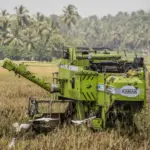
In a world where the quest for perfection often meets the rustic realities of agriculture, the story of jet rice polishers unveils a fascinating conversion—from rough grains to refined kernels that grace our tables.This journey is not merely about polishing rice; it symbolizes the broader narrative of precision in farming adn the evolving landscape of agricultural technology. As farmers increasingly embrace innovation, the delicate balance between tradition and modernity becomes palpable. join us as we delve into the intricate processes that breathe new life into grains, revealing how the precision of jet rice polishers elevates quality and efficiency, ultimately impacting both the farmer’s livelihood and the consumer’s experience. In the dance between nature’s bounty and technology’s touch, we uncover the transformative power that lies within the realms of precision farming.
Crafting a grain: The Evolution of Jet Rice Polishers in Pursuit of Perfection
The journey of jet rice polishers reflects not only technological advances but a broader narrative about the quest for excellence in agriculture. In the late 20th century, a rice farmer named mr. Tanaka, operating in a small village in Japan, faced a persistent dilemma: how to improve the quality of his rice while minimizing waste. His answer lay in innovation; he invested in an early model of a jet rice polisher. This device, characterized by its high-speed jets and precision nozzle technology, replaced the customary stone mills, which frequently enough produced uneven polishing results. Mr. Tanaka’s decision moment arrived when choosing between investing in the newer technology or continuing with the old ways that provided familiarity but resulted in compromised quality.With the jet rice polisher, his yield not only exhibited a visually appealing luster but also retained the nutritional value, a contrast to the frequently enough dull and nutritionally depleted rice produced by older methods. this pivotal switch led to a rise in demand from neighboring markets eager for premium quality, thereby elevating thier local economy.
As the technology evolved, so did the expectations.Each new generation of jet rice polishers incorporated feedback from farmers like Mr. Tanaka. The refinements included adjustable polishing levels to cater to different rice varieties and the ability to process rice more gently, thereby ensuring minimal grain breakage. One insightful case involves a co-op of farmers in thailand who implemented this advanced polisher on Mr. Tanaka’s recommendation. Initially skeptical about the promised results, their first batch of polished rice showed a striking 25% increase in market price compared to their usual output. It was a transformative moment, highlighting the intricate balance between traditional farming practices and modern technology. The contrasting outcomes between expected and realized benefits reinforced their trust in innovation.As they learned to navigate the nuances of these machines, their ability to produce premium grains steadily improved, emphasizing that precision in farming isn’t just a trend—it’s a necessity for survival and growth in the competitive agricultural landscape.

From Field to Finish: Navigating the Challenges of Precision Agriculture
As the sun began to rise over the Indian countryside, Raj, a family farmer, prepared to inspect his fields, knowing that each centimeter of his land was critical to maximizing his rice yield. With recent investments in precision agriculture technology, including satellite imagery and soil sensors, Raj had hoped to enhance his decision-making and improve crop health. Though,he quickly learned that technology alone wasn’t the answer. The initial excitement of reading detailed analytics soon turned into frustration when the data didn’t align with the reality on the ground. In one instance, the sensors indicated that moisture levels were optimal, leading Raj to delay irrigation. When he finaly noticed the plants wilting, it was a stark reminder that while data can provide insights, it needs to be coupled with intimate local knowledge. He realized he needed to balance technology with traditional farming wisdom—an ongoing dialogue between what the tools said and what the land was expressing.
A few fields over, Priya, another local farmer, took a different approach with her new jet rice polisher and the advanced techniques offered by precision farming.Unlike Raj, she was keenly aware of the importance of trial and error.Last season, she meticulously tested varying polishing techniques on different batches of rice, adjusting parameters based on moisture content detected through her soil sensors.while the initial polish left some grains fractured, she soon fine-tuned her process, which she documented in a simple table:
| Moisture Content (%) | Polishing technique | Outcome |
|---|---|---|
| 12 | Gentle Roller | Minimal breakage, high quality |
| 10 | High Speed Polish | High breakage, low quality |
| 11 | Custom Polisher | Optimal balance, excellent finish |
priya’s willingness to adapt her techniques based on her findings transformed her output—resulting in a distinctly better quality of rice that attracted more buyers. Her success stemmed not just from high-tech equipment but from her ability to learn from both failures and successes, navigating through the sensory information and brewing unforeseen expectations. This collaborative choice-making between old and new practices showed that precision agriculture isn’t just about incorporating advanced tools; it’s about fostering a mindset that embraces flexibility, testing, and continuous improvement.
Turning Points in Transformation: Lessons Learned from the Journey of Rice Polishing
The transformative journey of rice polishing is punctuated by critical turning points that illustrate both the challenges and triumphs faced by farmers and mill operators. One of the moast significant moments came when traditional hand-pounding methods began to yield to mechanization. For instance, a small-scale farmer in Punjab, India, initially skeptical of investing in a jet rice polisher, took the leap after witnessing a neighbor’s success.The neighbor had improved grain quality considerably and decreased production time.This decision became a pivotal moment, not only enhancing his income but also altering the community’s perception of modernization. The small group of farmers that watched this transformation unfold had to reassess their previous expectations; they learned firsthand that embracing technology could lead to higher quality outputs with lower labour costs.
The lessons learned from these experiences frequently enough highlight the contrast between expectations and results. Initially, many farmers anticipated that automation would reduce their labor force and drive down the cost of production.However, they found that it actually allowed them to invest more time in refining othre aspects of their farming, such as soil health and crop rotation strategies. A key takeaway from this journey is the importance of adaptability and openness to change,as evidenced by another farmer from Vietnam who shared his story after switching to a jet rice polishing system. Even though he was concerned about the upfront costs, the increased yield and marketability of his polished rice far outweighed his initial investment. Key Lessons Learned:
- Investing in technology can lead to unexpected positive outcomes.
- Adapting to changing agricultural practices enhances not only income but overall community resilience.
- collaboration and knowledge-sharing among farmers can accelerate the acceptance and integration of new technologies.
A Clear Reflection: How Technology Shapes Quality and Sustainability in Farming Practices
amidst the lush fields of southern India, farmers like Anil have started to explore the intersection of technology and sustainability through innovative tools like jet rice polishers. Anil, who inherited his family’s rice farm, faced the pressing challenge of improving both the quality of his produce and the environmental impact of his farming practices. Through his journey, he discovered that integrating precision technology, such as moisture sensors and drone monitoring, transformed his approach to farming. With every decision to invest in these technologies, Anil has become more adept at measuring yields and identifying crop stress before it became detrimental. As an inevitable result, he not only improved the overall quality of the rice but also reduced water usage by 30%. This newfound ability to respond proactively enabled him to maintain the sustainability of his land, while together meeting the rising consumer demand for premium rice.
Yet, the path wasn’t always smooth.Anil found himself at a crossroads when deciding whether to replace his traditional practices with more modern approaches.Many of his neighbors were skeptical, with some believing that technology would overcomplicate farming. A pivotal moment came when a neighboring farmer, Priya, initially reluctant to adapt, attended a workshop demonstrating the effectiveness of jet rice polishers. She eventually took the leap, seeing an immediate difference in her production quality and marketability. The use of these polishers not only enhanced the rice’s appearance but also preserved nutrients during processing. The contrasting experiences of Anil and Priya highlight a crucial lesson in modern agriculture: embracing technological advancements can lead to unexpected, positive outcomes. This shift is not just about better rice; it’s about forging a sustainable future for farmers through the responsible application of technology.
Future Outlook
As we conclude our exploration of the pivotal role Jet Rice Polishers play in the world of agriculture, it’s clear that their journey from rough beginnings to refined technology embodies much more than mere innovation; it symbolizes a fundamental shift in how we perceive precision in farming.The transformative power of these machines transcends the act of polishing rice; it redefines the standard for quality, efficiency, and sustainability in the agricultural sector.
as farmers around the globe adopt these advanced tools, we witness not just an elevation in product quality, but a new chapter in our relationship with the land. The meticulous process harnessed by Jet Rice Polishers stands as a testament to the harmonization of tradition and technology, proving that when precision meets passion, the results can be nothing short of exceptional.
In the pursuit of excellence, every grain polished, every technique refined, marks a step toward a future where agriculture flourishes through innovation. The journey may be ongoing, but as we watch the fields transform, we are reminded that every small detail, perfected with care, contributes to a larger vision—a vision where the fruits of our labor are not only more beautiful but also more bountiful and sustainable for generations to come.