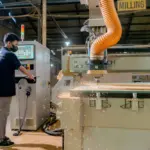
In the realm of agriculture, few crops hold as much significance as rice, a staple food for billions around the world. As the demand for quality rice production continues to soar, the role of technology in paddy processing has become increasingly paramount.In this evolving landscape, innovative machinery is elevating the efficiency and effectiveness of grain handling processes, marrying age-old practices with cutting-edge advancements. This article delves into the technical advances in paddy processing machinery, offering a extensive analysis of performance metrics, specifications, and efficiency measures. By examining these developments, we unlock insights into how modern equipment is revolutionizing the industry, ensuring not only enhanced productivity but also improved quality of the final product. Join us as we explore the intricate interplay of technology and agriculture, shedding light on the machinery that transforms paddy into an essential grain, ready to nourish the world.
Innovative Design Criteria for Enhanced efficiency in Paddy Processing Equipment
To achieve enhanced efficiency in paddy processing equipment, innovative design criteria must focus on optimizing key performance metrics and ensuring adaptability to various operational scales. Vital mechanisms that contribute to efficiency include energy consumption rates, throughput capacity, and byproduct recovery. These parameters can be assessed by the following criteria:
- Energy Efficiency: Modern paddy processing machines, such as huskers and separators, are now incorporating energy-saving technologies like variable frequency drives (VFDs) to regulate motor speed based on load requirements.
- Material Handling Optimization: The inclusion of automated conveying systems minimizes manual handling, thus reducing delays. As an example, gravity-fed or pneumatic systems can be employed to transport paddy throughout the processing stages.
- Modular Design: Equipment designed with modular components allows for easy upgrades and maintenance. For example,a multi-functional paddy processor can adapt to different rice varieties by swapping out specific attachments.
Furthermore, performance factors such as durability, ease of maintenance, and processing flexibility must be meticulously evaluated. A comparative analysis of processing speeds and grain damage rates highlights the importance of operational consistency across various machinery models. for example, a typical modern paddy husker operates efficiently at throughput rates of up to 3 tons/hour with less than 5% grain breakage, while older models may only process 1.5 tons/hour with a 10-15% damage rate. The following table summarizes critical specifications of select paddy processing equipment:
| Machine Type | Throughput (tons/hour) | Damage Rate (%) | Energy Consumption (kW) |
|---|---|---|---|
| High-efficiency husker | 3.0 | 4 | 45 |
| Traditional Husker | 1.5 | 12 | 55 |
Identifying limitations,such as susceptibility to wear in high-performance systems and the required skill level for operation and maintenance,remains essential. Continuous monitoring and data collection during operation, including vibration analysis and thermal imaging, can inform predictive maintenance protocols, further enhancing the lifespan and efficiency of paddy processing equipment.

Breakthrough Technologies in Grain Handling: Evaluating Performance Metrics and Material Durability
In the realm of grain handling, breakthrough technologies such as automated grain loaders, smart grain bins, and mechanical sorters have considerably improved efficiency and durability. These technologies employ advanced sensors and IoT (Internet of Things) connectivity, enabling real-time monitoring and data collection regarding grain conditions, flow rates, and environmental factors. Key performance metrics for evaluating these systems include:
- Throughput Rate: Measured in tons per hour, this metric evaluates the efficiency of grain loading and unloading mechanisms.
- Energy Consumption: analyzing the energy usage per ton processed allows for better cost management in operations.
- Operational Downtime: The frequency and duration of machinery repairs impact overall productivity.
- Material Durability: Assessing the longevity of components against wear and tear caused by abrasive materials like rice husks.
as an example,automated grain loaders that incorporate vibration technology can enhance grain movement while reducing potential damage caused during handling.When comparing material options,technologies that utilize high-density polyethylene (HDPE) or stainless steel for structural components display superior resistance to corrosion and wear compared to traditional materials. Given the notable operational costs involved, processors should consider factors such as the particle impact resistance of different materials and the design’s ability to minimize moisture retention, which is crucial for maintaining grain quality. Though, potential limitations include the initial investment costs for smart technologies and the need for skilled personnel for maintenance and operation, which can hinder widespread adoption in smaller facilities.
Performance Paradox: Balancing Processing Speed and Quality Standards in Modern paddy Machinery
The performance paradox in modern paddy machinery arises from the need to achieve optimal processing speeds while maintaining high quality standards in rice production. As processors push for increased throughput, they frequently enough encounter trade-offs between speed and the integrity of the grain. High-performance machinery utilizes advanced technologies such as sensor feedback systems and automated control loops to monitor grain quality in real-time, allowing for adjustments that help balance these competing demands. For instance, high-speed millers may operate at rates exceeding 1,000 kg/h, but if not calibrated correctly, this may result in higher broken rice percentages and grain damage. Effective machinery design incorporates features such as multi-pass milling systems, which, through sequential processing, can enhance quality even at elevated speeds by allowing for minimal processing per pass while retaining grain structure.
key performance factors that influence the balance between processing speed and quality include temperature management, moisture control, and roller pressure settings. For example, maintaining optimal temperatures below 60°C during milling is crucial to prevent starch gelatinization, which can lead to poor cooking quality. Comparative analysis of conventional versus aerodynamic drying systems reveals that while the latter allows for quicker moisture removal, it can also lead to uneven drying, affecting grade outcomes.Table 1 provides a snapshot of specifications from various paddy processing machines available on the market, highlighting critical metrics such as throughput capacity, energy consumption per ton, and typical broken rice percentages at different RPM settings:
| Machine Model | Throughput (kg/h) | Energy Consumption (kWh/ton) | Broken Rice % |
|---|---|---|---|
| Model A | 1200 | 30 | 5.6 |
| Model B | 1500 | 28 | 7.4 |
Engineering Innovations in Paddy Processing: A Deep dive into Specifications and Operational Limitations
Engineering innovations in paddy processing machinery have significantly enhanced the efficiency of grain handling, focusing on specifications that improve yield and reduce operational limitations. Modern paddy processing units often integrate automated systems that utilize sensors and IoT technology to monitor various parameters in real-time, optimizing the drying, milling, and storage processes. Key specifications include:
- Capacity: Units vary from small-scale systems (<100 kg/h) to large industrial setups (>5,000 kg/h), tailored to specific operational scales.
- Energy Consumption: Efficient machinery utilizes low-energy mechanisms, averaging around 1-2 kWh per ton of paddy processed.
- Steam and Temperature Control: Advanced machines feature precise temperature control systems to ensure optimal drying rates, preventing kernel damage.
- Grain Quality Maintenance: Innovations such as color-sorting cameras and grading belts maintain grain quality, significantly reducing the percentage of broken grains to below 8%.
Despite these advancements,operational limitations still exist. For instance, while integrated cleaning and husking machines enhance initial processing steps, they may struggle with varying grain qualities, leading to inconsistent outputs depending on the moisture content and impurities present.Additionally, high-capacity milling machines frequently enough exhibit wear and tear that can elevate maintenance costs and downtime, notably if not designed for easy parts replacement.The following performance factors are crucial for assessing machine effectiveness:
| Performance Factor | Importance |
|---|---|
| Processing Time | Directly affects throughput; optimized machines can reduce processing time by 25%. |
| Yield Efficiency | Higher efficiency yields a greater volume of marketable rice, ideally above 65% for quality grain. |
| Cost Efficiency | Cost-per-ton metrics help gauge the machine’s overall economic viability in long-term operations. |
These specifications and performance factors necessitate a thoughtful approach to machinery selection based on desired outcomes and local conditions. As technology evolves, manufacturers continually aim to improve these metrics, addressing limitations with innovative designs, such as modular components that can be upgraded without replacing entire systems, thus enhancing sustainability and operational longevity.
Insights and Conclusions
the landscape of paddy processing machinery has evolved significantly, driven by the integration of cutting-edge technology and a relentless pursuit of efficiency. As we have explored, advancements in performance metrics and specifications not only enhance the processing of paddy but also ensure that farmers and processors alike can maximize yield while minimizing waste.
The innovations discussed—from automated systems that reduce labor costs to precision machinery that enhances grain quality—reflect a broader trend towards enduring agricultural practices. By harnessing these technical advancements, stakeholders in the rice production industry can navigate the challenges of a rapidly changing market and meet the growing demands for food security.
as we look to the future, it is indeed clear that the journey of paddy processing machinery will be one of continuous improvement and adaptation. Embracing these technologies will not only elevate efficiency and productivity but also pave the way for a more resilient agricultural framework. The continued analysis of these performance and efficiency metrics will be crucial as we strive for optimal grain handling in an increasingly competitive world. The road ahead is paved with potential, and those willing to innovate will undoubtedly reap the benefits.