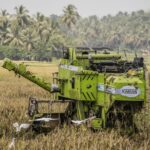
In a world where the demands of a burgeoning population strain our agricultural systems, the quest for enhanced efficiency in food production has never been more urgent. Among the crops that underpin global sustenance, rice stands as a staple for over half of the planet’s inhabitants, making its processing an integral component of food security.Enter the next generation of rice processing machines—innovative technologies that promise not only to optimize production but also to revolutionize the agricultural landscape. This article explores how these cutting-edge machines are redefining traditional methodologies, unleashing untapped potential within the farming community, and playing a pivotal role in addressing the pressing challenges of food availability and sustainability. As we delve into the intersection of technology and agriculture, we uncover the transformative impact of these advancements on both local economies and global food security.
Emerging Technologies or Temporary Trends: The Real Impact of Next-Gen Rice Processing on Sustainability
Next-gen rice processing technologies, such as artificial intelligence-driven milling systems and precision sorting machines, are often lauded as revolutionary advancements in agricultural efficiency.However, a closer examination reveals that these innovations, while promising, should not be confused with panaceas for sustainability challenges. The real impact of these technologies hinges on their integration into existing agricultural frameworks, which varies globally. In regions plagued by resource constraints, overreliance on high-tech solutions may lead to neglect of accessible methods that could yield immediate benefits. For instance, low-cost mechanical options that enhance local milling practices can significantly reduce post-harvest losses without the need for ample investment in high-tech machinery.
Trade-offs also emerge when considering the environmental footprint of next-gen processing solutions. While these machines may decrease water and energy usage in production, their manufacturing and maintenance might require considerable resources, perhaps undermining their sustainability claims. effective implementation requires a nuanced understanding of local contexts,such as the availability of skilled labor and infrastructure. engaging local stakeholders in the transition to next-gen equipment ensures not just technological adoption but also alignment with community needs.Recommendations for stakeholders include conducting lifecycle assessments of new technologies, prioritizing the upskilling of local operators, and fostering a robust dialogue amongst technology providers, farmers, and consumers to navigate the complexities of sustainability rather than adopting technologies in isolation.

beyond Efficiency: The Untold Cost of Automation in Smallholder Rice Farming
While automation in smallholder rice farming is often lauded for enhancing productivity and reducing manual labor, the narrative frequently overlooks its hidden costs, particularly in socio-economic and ecological dimensions.Automation can increase efficiency, but the ramifications include not only potential job losses for traditional workers but also the reallocation of power within farming communities. For smallholders, relying heavily on machines may undermine traditional skills and wisdom passed through generations, creating a dependence on technology that can be unsustainable, particularly when machines fail or require costly maintenance. The challenge, therefore, lies in balancing the short-term gains of high-tech solutions with the long-term resilience of farming practices.
Furthermore,agricultural automation can exacerbate existing disparities. Wealthier farmers might potentially be better positioned to invest in advanced machinery, leaving smallholders who cannot afford such technologies further behind.This could lead to a rift in productivity levels, displacing smallholder farmers in the market altogether. A nuanced proposal would be to promote a hybrid approach that incorporates both traditional methods and selective automation. By ensuring that smallholders have access to affordable training and scalable technologies, the focus should shift to empowering farmers rather than simply streamlining processes. Establishing cooperative models can facilitate shared access to equipment, ensuring that the benefits of automation are more equitably distributed and less likely to erode community ties essential for enduring agriculture.Here are some essential considerations:
- Invest in training programs that marry technology with traditional practices.
- Encourage cooperative ownership of equipment to ensure shared benefits.
- Advocate for policies that support smallholder farmers in accessing financing for tech upgrades.
Innovation Versus Tradition: Weighing the trade-offs of High-Tech Rice Processing equipment
The adoption of high-tech rice processing equipment offers meaningful efficiency gains but also invites a debate on the trade-offs against traditional methods. While modern machinery enhances throughput and minimizes post-harvest losses through automated monitoring and precision tooling, traditional methods maintain cultural heritage and often leverage local knowledge that has been honed over generations. Some key distinctions include:
- Efficiency vs. Tradition: Advanced machines can process rice faster and with less waste, but traditional processes often require less investment and can be better suited to small-scale farmers in developing regions.
- Employment vs. Automation: High-tech solutions may reduce manual labor, risking job losses in rural economies; conversely, they can create demand for technical specialists, thus requiring a shift in workforce training.
- Cost vs. Access: The upfront investment in cutting-edge technology can be prohibitive, particularly for smallholders. However, leasing options or cooperative purchases can mitigate these barriers, though risks of dependency on technology might emerge.
to navigate this innovation-versus-tradition dilemma, a nuanced approach is crucial. For regions where labor costs are low and agriculture is still largely manual, a hybrid strategy may yield the best results, allowing small-scale farmers to gradually adopt technology without sacrificing traditional practices. Hybrid systems can include features such as:
| Type | benefit | Drawback |
|---|---|---|
| Fully automated processing | Maximizes efficiency | Requires significant capital |
| Partially manual methods | Respects local practices | Less efficient |
| Combined systems (tech + hand) | Balanced approach | Complex implementation |
Ultimately, the goal should not be to strictly choose one over the other but to identify pathways that respect the richness of tradition while harnessing the power of innovation.As stakeholders consider the future of rice processing,it’s essential to challenge the narrative that high-tech solutions are universally superior,ensuring that decisions are tailored to the socio-economic landscape and cultural context of the regions involved.
The Promise and Peril of Automation: Rethinking Food Security in the Age of Advanced Machinery
The integration of advanced machinery in agriculture, particularly in rice processing, holds immense promise for revolutionizing food security. Yet, with this promise comes a set of challenges that must be navigated cautiously. The efficiency that comes from automation can drastically reduce waste and increase the speed of production, potentially lowering food costs and making staple grains more accessible.Though, an overreliance on technology may inadvertently exacerbate existing inequalities within the agricultural sector. Smallholder farmers, who often lack the capital needed for investment in top-tier technologies, could find themselves further marginalized. This presents a crucial trade-off: while automation can create economies of scale, it risks concentrating production capabilities in the hands of a few, therefore heightening the vulnerability of those at the lower end of the supply chain.
Furthermore, the transition toward automated rice processing machines necessitates a reevaluation of workforce dynamics and community resilience. The assumption that automation will displace agricultural workers is not universally valid; instead,a nuanced understanding of labor dynamics is essential. Many regions may benefit from a hybrid approach where manpower and machines coexist harmoniously. As an example, while machines can handle labor-intensive tasks, workers can engage in higher-value activities, such as quality control, market engagement, and technological maintenance. This nuanced strategy not only preserves livelihoods but also fosters local expertise. Implementing training programs tailored to enhance skills in tandem with automation could ensure a more equitable advancement in the agricultural landscape, transforming risk into chance for smallholders and rural communities alike.
In Summary
as we stand on the brink of a new era in agricultural innovation,next-gen rice processing machines emerge as transformative agents for efficiency and sustainability. These advanced technologies not only promise to optimize the post-harvest sector but also play a crucial role in securing the future of global food supplies. By enhancing productivity and reducing waste, they empower farmers to rise to the challenges of an ever-evolving marketplace while nurturing the planet’s resources.
As stakeholders across the agricultural spectrum—from local farmers to industrial manufacturers—embrace these cutting-edge solutions, the potential for revitalizing communities and enhancing food security becomes increasingly palpable. In this unfolding narrative of progress, the interplay between tradition and technology holds the key to a more resilient agricultural landscape, where every grain of rice contributes to a healthier world.
In navigating this journey, it is imperative for us to remain committed to continuous innovation and collaboration, ensuring that the spirit of agriculture thrives alongside advancements in technology.The future is ripe for transformation, and with it, the promise of nourishing generations to come.