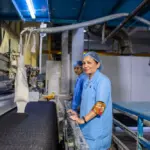
In a world where nearly half of the global population relies on rice as a staple food, the integrity of this humble grain signifies more than sustenance; it embodies the very essence of food security. As our demographic landscape shifts and climate challenges intensify, the need for innovative solutions in agriculture has never been more urgent. enter smart technology—a revolution that transcends traditional farming practices and dives deep into the heart of rice processing. From precision farming to automated milling systems, these advancements are reimagining how we grow, process, and distribute rice, all while addressing the pressing concerns of sustainability and efficiency. In this exploration of the intersection between technology and agriculture, we will delve into how these smart solutions are not only enhancing the quality of rice production but are also paving the way for a more secure and resilient future in global food systems. Welcome to the future of rice—the future of food security.
Redefining Sustainability: The Double-Edged Sword of Smart Technologies in rice Processing
Smart technologies in rice processing are often hailed as paragons of sustainability, promising to enhance efficiency while minimizing resource use. However, this optimism overlooks crucial nuances and trade-offs inherent to their implementation. For instance, while precision agriculture techniques like IoT sensors enable real-time soil monitoring and irrigation control, they can also create dependencies on technology that marginalizes smallholder farmers lacking access to capital or technical know-how. This dichotomy presents a critical challenge: ensuring that technological advancements do not exacerbate socio-economic inequalities. Moreover, the rush to adopt digital solutions can lead to increased energy consumption and electronic waste if measures for responsible disposal and energy sourcing are not prioritized.
To truly leverage smart technologies for sustainable rice processing, stakeholders must navigate a complex landscape of decisions that weigh immediate benefits against long-term impacts. Here are key considerations for responsible integration:
- Investment in Local Infrastructure: Building capacity in rural areas fosters resilience and empowers farmers.
- Lifecycle Assessment: Evaluating the environmental impact from a technology’s inception to its disposal ensures accountability.
- Customized Solutions: Tailoring technology to local conditions and needs can bridge the gap between large-scale efficiency and smallholder viability.
By meticulously balancing these aspects, stakeholders can redefine sustainability in rice processing, ensuring that smart innovations contribute meaningfully to food security rather than becoming a double-edged sword.
From Crop to Consumer: navigating the Ethical Implications of Technological Advances in Rice Production
The journey from crop to consumer in rice production is undergoing dramatic transformations due to technological advances. While the integration of AI, IoT, and genomics promises to enhance yield and efficiency, it also raises a host of ethical concerns. For instance, the shift towards biotechnology, such as genetically modified organisms (GMOs), presents both significant opportunities and challenges:
- Food Security: Enhanced rice varieties can withstand climate stresses, potentially increasing food availability.
- Consumer Acceptance: GMOs often face public skepticism; it is crucial for producers to address safety concerns transparently.
- Environmental Impact: While reducing pesticide use is a benefit of tech-driven farming, the long-term ecological consequences of these innovations are still uncertain.
Additionally, the ethical implications extend beyond agricultural practices; they influence labor dynamics and socio-economic structures. Automation in rice processing can lead to significant job displacement for workers reliant on manual methods. Here, stakeholders must engage in a delicate balancing act:
| Trade-Offs | Nuanced Recommendations |
|---|---|
| Cost Savings vs. Job Loss | Invest in reskilling programs to prepare labor for roles in tech-driven systems. |
| Yield Maximization vs. Biodiversity | implement policies that encourage sustainable practices alongside high-yield farming. |
In navigating these complexities, a multi-faceted approach that considers technological impact, public perception, and ethical labor practices is essential. only by acknowledging these trade-offs can we ensure that advancements in rice production genuinely contribute to a sustainable future.
Smart Innovations and Food Security: The Uneven Landscape of Access and Affordability
As technology races ahead, the promise of smart innovations in rice processing presents a paradox: while advancements enhance efficiency and sustainability, the benefits remain disproportionately accessible. Developed regions often enjoy elegant technologies like precision farming tools and AI-driven analytics,which streamline production and reduce waste. Conversely, smallholder farmers in developing countries face barriers rooted in limited infrastructure, financial resources, and digital literacy. To bridge this gap, stakeholders must prioritize targeted investments and hands-on training that empower local farmers rather than simply exporting technologies. This nuanced approach necessitates a shift from a one-size-fits-all mentality to tailored solutions that consider local contexts.
Moreover, the trade-offs between affordability and accessibility cannot be overstated. Smart technology frequently enough comes at a premium price, leading to a scenario where the most vulnerable populations are priced out of the benefits. To enhance food security sustainably, it is essential to explore innovative financing models, such as microloans or community-based funding, that can help democratize access to smart technologies. Additionally, governments and NGOs should incentivize the advancement of open-source technologies that allow for greater adaptability and lower costs.By challenging the assumption that high-tech solutions are inherently the best options, we open the door to a broader array of strategies — including organic farming practices and local knowledge systems — that can coexist with technological advancements in a competitive market.
More than a Kernel: Unpacking the Hidden Costs and Benefits of Digital Transformation in Agriculture
The shift towards digital transformation in agriculture goes beyond simply integrating advanced technologies; it encompasses significant hidden costs and benefits that can reshape the entire sector. A common misconception is that implementing smart technologies, such as AI-driven analytics or IoT sensors, results solely in efficiency gains. However,these tools necessitate substantial upfront investments,not only in hardware and software but also in training and change management. Given the disparity in resources between large agricultural enterprises and smallholder farmers, the latter face stark challenges. The adoption of smart technologies may benefit the former disproportionately,widening the existing inequalities within farming communities.
To navigate this complex landscape, stakeholders should weigh their options carefully and consider nuanced recommendations rather than adopting a one-size-fits-all approach. As an example, implementing precision agriculture can enhance yields, but it may require farmers to rethink their entire operational framework. factors to consider include:
- Cost vs. Benefit: Evaluate the return on investment by comparing the upfront costs with long-term gains, factoring in potential disruptions.
- Skill Development: Invest in training programs that empower workers and farmers,ensuring technology can be utilized effectively.
- Data Ownership: Encourage obvious data governance practices to protect farmers’ interests against exploitation by larger corporate entities.
By making informed trade-offs and tailored decisions, farmers can better leverage digital transformation to enhance productivity while concurrently addressing social equity and environmental sustainability concerns.
Closing Remarks
As we stand at the crossroads of innovation and tradition, the journey of rice processing is being rewritten by smart technology. Beyond the grain lies a future where efficiency meets sustainability, unlocking the potential to nourish communities and secure food for generations to come. With each technological advancement—be it in precision agriculture, data analytics, or automated processing—new possibilities emerge that promise not only to increase yields but also to enhance the quality of life for farmers and consumers alike.
As we embrace these advancements, it is essential to remember that progress does not come without responsibility. The path forward must be paved with collaboration among stakeholders, a commitment to ethical practices, and an unwavering focus on environmental stewardship. By harnessing the power of smart technology, we have the prospect to shape a resilient food system that honors the artistry of rice cultivation while addressing the pressing challenges of food security.
the revolution in rice processing is not merely about technology; it is about people,communities,and the intricate tapestry of culture and cuisine that rice represents worldwide.As we look to the future, let us cultivate a mindful approach to innovation—one that respects the past and nourishes the future, ensuring that no grain goes to waste and every plate is filled with hope.