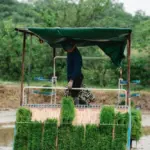
In the heart of countless landscapes, where the sun kisses the earth and water mirrors the sky, rice has flourished for millennia, nourishing populations and shaping cultures. Yet, as the world grapples with challenges like climate change and a burgeoning population, the age-old practices of rice cultivation face pressing transformations. Enter the realm of modernity: innovative rice machinery is stepping onto this verdant stage, merging tradition with technology. From precision seeding to efficient harvesting, these advancements are not only revolutionizing agricultural efficiency but also uplifting communities and altering the very fabric of rural life. In “From Fields to Futures,” we explore the profound impact of rice machinery, revealing how it is indeed redefining the interplay between human endeavor and the natural world, and paving the way towards enduring prosperity for generations to come.
Nurturing Change: Farmers Embrace Technology and Tradition in Rice Cultivation
The journey of modern rice cultivation often pivots on the delicate balance between traditional practices and cutting-edge technology. Take the case of Rajesh, a third-generation rice farmer from Tamil Nadu, who initially hesitated to adopt new machinery. For decades, he relied on time-honored techniques passed down from his grandfather—methods that emphasized a deep connection with the soil and nature. Though, as climate change began to affect yield, he faced a decision point: continue with traditions or explore the machinery that promised greater efficiency. After witnessing a neighboring farm’s remarkable success with automated seeders and harvesters, Rajesh decided to incorporate select technologies while maintaining his family’s cultural practices. The result was a harvest that not only exceeded his expectations but also reduced the labor hours considerably, allowing him to spend more time with his family and reinvest in sustainable practices that honored his family’s legacy.
In another corner of the country, Anita, a young farmer in West bengal, embodies the potential of blending innovation with tradition. After attending a local workshop on precision agriculture, she was captivated by the idea of using drones and soil moisture sensors to monitor her crops without disrupting the ecosystem. Initially, her parents were skeptical; they valued their traditional methods, which connected them to the rhythms of nature. However,Anita was determined. She started small, integrating drone technology to assess her fields for pests and soil health. Over a single growing season, she documented a 30% increase in yield. The small investments in technology not only revitalized the family’s farming practices but also bridged the generational gap. What began as a cautious foray into modernity turned into an inspiring story of adaptation, where technology complemented rather then replaced tradition, thus redefining success.

Resilience in the Rice Fields: Overcoming Adversity with Innovative Machinery
In the heart of rural Vietnam, a small village grapples with the reality of climate change and its devastating impact on the rice harvest. Farmers like Nguyen, a third-generation rice grower, faced a relentless drought that left his fields parched and his family’s future uncertain. Just when hope seemed lost, an innovative rice milling machine from a local startup entered the scene. This machine not only efficiently processed rice but also came equipped with a moisture sensor that allowed farmers to determine the best time to harvest based on the prevailing weather conditions.Transitioning to this technology wasn’t easy for Nguyen; he had to overcome skepticism from his fellow farmers, who were hesitant to abandon traditional methods. But as they witnessed Nguyen’s improved yield, the tide began to turn. Today, every farmer in the village has adopted the machine, leading to higher profits and a renewed optimism about their livelihoods.
Across the Indian subcontinent, a contrasting story unfolds in the bustling fields of Punjab, where Monika, a determined young woman, took it upon herself to step into her family’s rice farming business. Faced with labour shortages during the crucial planting season, Monika made the bold decision to invest in a multi-functional rice transplanter. This machinery not only reduced the need for manual labour but also cut planting time significantly. Initially, she faced pushback from her father, who believed that only manual planting could ensure the quality of their crops. Though, with every passing season, Monika showed him that the transplanter could achieve even higher efficiency without compromising quality. over time, the results spoke for themselves: her rice field flourished, and the family’s earnings increased by 30%. This shift not only strengthened Monika’s position in the family but also inspired other women in her community to embrace technology, breaking traditional barriers and reshaping gender roles in agriculture.
Cultivating Sustainable Futures: The Ripple Effects of Modern Agriculture
As local farmers in Southeast Asia embrace modern rice machinery, the impact extends far beyond the fields. take, for example, the village of Ban Mai in Thailand, where a farmer named Somchai decided to invest in a rice transplanter after years of back-breaking manual labor. Initially, he was hesitant—fearful of the upfront costs and unsure if he would see a return on his investment. However, after just one harvest, he found that using the machine not only increased his yield by 25% but also reduced planting time significantly.This newfound efficiency allowed him to dedicate more time to nurturing his crop and even exploring new agricultural methods, such as organic pest management, which further enhanced the quality of his harvest and open new markets. Somchai’s story is just one among many, proving that effectively leveraging modern technology can cultivate not only better harvests but an improved quality of life.
As these advancements ripple through communities, the effects are profound and interconnected. In neighboring regions, women like Amina, a widow who struggled to make ends meet, have been empowered to take up farming. With access to machinery,she can now operate her family farm solo effectively while also teaching other women in her community to do the same. the increased productivity fosters a sense of solidarity as women share resources and knowledge. Lessons learned from these situations include:
- Community Engagement: As farmers adopt technology, they can collaborate in ways that strengthen social ties.
- Financial Resilience: The initial financial sacrifice often leads to greater economic stability.
- Environmental Awareness: With greater yield per hectare, farmers can focus on sustainability efforts, leading to cleaner practices.
Meanwhile, contrasting early doubts about technology reveals the extraordinary possibilities it holds.rather of diminishing their roles, rice machinery has provided farmers with the tools they need to embrace innovation, reinforcing their positions as stewards of the land for generations to come.
Harvesting hope: Personal Stories of transformation Through Rice Machinery
In the village of Kaliyakkavilai, farmers once struggled against the odds, toiling long hours under the scorching sun, only to reap meager harvests. One pivotal year, the introduction of modern rice machinery marked a watershed moment for many families.Take the story of Anil, a third-generation rice farmer. Faced with diminishing yields and rising costs,he hesitated when his fellow farmers decided to invest in a rice transplanter. Doubts clouded his expectations, yet he eventually took the plunge, powered by the hope of improved productivity. within the first season, Anil found himself harvesting a record crop—30% more than what he had previously managed. This surprising result not only alleviated his family’s financial woes but also sparked a community interest in the technology.The ripple effect was clear: farms flourished, and so did lives, allowing families like Anil’s to invest in education for their children rather of worrying about basic survival.
the story doesn’t end there. In contrast, riya, a neighboring farmer, initially turned away from machinery, entrusting her traditional methods without question. As Anil shared his success, Riya experienced a profound internal conflict. The fear of change clouded her judgment, but a drought that year forced her to reconsider. After a season of dismal yields and watching her children go without essential needs,she took a leap of faith. Following a local workshop that provided training on operating a combine harvester, Riya saw her perspectives shift dramatically.In the following harvest, she not only matched her neighbour’s productivity but also enhanced her soil quality through better weed management. This transformative experience highlighted a crucial lesson: sometimes, embracing innovation can lead to resilience and growth beyond one’s expectations. Through these personal stories, the transformative power of rice machinery is evident—not just in crops, but in the very fabric of community life.
To Wrap It Up
As we draw the curtains on our exploration of rice machinery and its profound impact on both lives and landscapes, it becomes clear that the journey from fields to futures is one marked by innovation and resilience. In the intricate dance between technology and tradition, rice machinery is not merely reshaping agricultural practices; it is crafting new narratives of possibility for farmers and communities alike.
With each passing season, the hum of machines signals more than just productivity; it echoes a commitment to sustainability, efficiency, and a brighter tomorrow.As we look forward,the seeds of progress sown today promise to flourish,cultivating not only bountiful harvests but also empowered livelihoods.
In transforming the age-old craft of rice farming, these machines are not just tools, but catalysts of change—bridging the past and propelling us toward a future ripe with opportunity. As we embrace these innovations, one cannot help but envision a world where the harmony of technology and nature continues to thrive, nurturing both the earth and the spirit of those who till its soil. The journey is far from over; it is only just beginning.