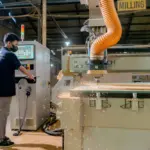
In the realm of agricultural production and food processing, maize stands out as a basic crop, sustaining populations and economies worldwide. As the demand for maize-derived products continues to rise, optimizing the milling process has never been more critical. This article delves into the intricate world of maize milling, showcasing the technical specifications that underpin efficient operations, the strategies to enhance process efficiency, and the performance metrics that gauge success. By exploring the latest advancements and best practices in maize milling, we aim to equip millers, agronomists, and industry stakeholders wiht the knowledge needed to maximize output while ensuring high-quality results. Join us on this journey to unlock the potential of maize milling and transform raw grain into a cornerstone of nourishment and innovation.
Engineering Precision in Maize Milling: A Deep Dive into Technical Specifications and Process Design
Engineering precision in maize milling involves a meticulous approach to technical specifications and process design that ensures optimal output and efficiency. At the core of maize milling technology lies the selection of machinery, primarily the roller mills, impact mills, and hammer mills. Each type presents distinct advantages depending on the desired end product, whether it be flour, grits, or meal. Key specifications to consider include:
- Mill Type: Roller mills are preferred for fine milling due to their ability to produce consistent particle size.
- Capacity: This should align with processing throughput needs, frequently enough measured in tons per hour.
- Energy Consumption: Specific energy consumption is a critical metric; efficient mills consume approximately 0.6 to 0.9 kWh per ton of maize processed.
- Mesh Size: The screen size used in milling can considerably impact granulation, with finer screens (100-200 microns) producing flour, while coarser options yield grits.
process design is equally vital; it must be informed by a extensive understanding of flow dynamics and moisture content management, as maize’s moisture levels typically range from 12% to 14%. Implementing pre-conditioning systems to control moisture can enhance the milling process by reducing the energy required for grinding. Moreover, integrating performance metrics is essential for ongoing optimization. Factors such as extraction rate, typically around 70-75% for efficient operations, and operational uptime (targeting 85% or higher) are indicative of machine performance. Limitations arise from wear and tear on milling surfaces, necessitating regular maintenance schedules that include monitoring the quality of wear parts, to sustain operational efficiency and product quality.

Evaluating Performance Metrics: key Indicators for Enhancing Efficiency in Maize Milling Operations
To enhance efficiency in maize milling operations, it is essential to establish and monitor performance metrics that provide concrete insights into the milling process. Key indicators include:
- throughput Rate: This measures the volume of maize processed per hour. An optimal throughput can vary depending on the mill’s capacity, but typically high-efficiency milling machines can achieve rates exceeding 1,000 kg/h.
- Extraction Rate: Indicates the percentage of flour obtained from the raw maize input.A higher extraction rate (over 70%) signifies effective and efficient milling,reflecting minimal grain loss and maximized yield.
- Energy Consumption: Energy metrics determine how much power is consumed per unit of output. Optimally designed mills should aim for less than 1.5 kWh per 100 kg of processed maize.
- quality Consistency: Measuring the granulation and purity of flour is crucial, especially for food safety and product quality. Parameters such as particle size distribution can be analyzed using sieve tests to ensure the final product meets industry specifications.
When evaluating performance metrics, it is also vital to consider external factors and limitations that could affect outcomes.For instance, the moisture content of maize, which ideally should be around 13-14%, plays a critical role in milling efficiency; higher moisture levels can lead to increased energy consumption and lower extraction rates. Additionally, comparing the operational metrics of different milling equipment, such as hammer mills versus roller mills, can provide crucial insights. Hammer mills may offer better flexibility and capacity, while roller mills tend to produce finer flour with superior quality, but frequently enough at a higher initial investment and maintenance cost.The selection of milling equipment should consider the trade-offs outlined in the following table:
| Type of Mill | Typical Capacity | Particle Size | Cost Efficiency |
|---|---|---|---|
| Hammer Mill | Up to 2,000 kg/h | Coarse to fine | Low initial cost |
| Roller Mill | Up to 1,500 kg/h | Fine | Higher initial cost |

Materials Matter: The Impact of Grain Quality and Milling Equipment on Output Consistency
Grain quality plays a pivotal role in the output consistency of maize milling processes. The fundamental parameters that define grain quality include moisture content, kernel hardness, and foreign matter presence, which significantly affect milling efficiency and flour characteristics. high-quality maize typically has a moisture content between 13-14%, which aids in optimal grinding and minimizes the risk of spoilage. Additionally, kernel hardness influences the energy required for milling. A more rigid kernel may necessitate advanced milling technologies such as roller mills that offer precision milling through adjustable gap settings. In contrast, using traditional stone mills can result in inconsistent flour sizes and possibly higher wear on the machinery. The presence of foreign materials such as dust and stones can degrade milling efficiency and require additional cleaning processes, impacting overall throughput.
The choice of milling equipment is equally critical in ensuring a consistent output. Modern milling operations often utilize a combination of degerminating mills and pin mills to achieve specific flour grades. Key specifications to consider include the horsepower rating, which directly correlates to the capacity of the mill, and the sieve sizes that define the coarseness or fineness of the resultant flour. A comparative analysis reveals that equipment configured for a two-pass milling process can enhance efficiency by minimizing feed losses, as evidenced by the following performance factors:
| Milling Type | Output (kg/hour) | Power Consumption (kW) |
|---|---|---|
| Degerminating Mill | 1000 | 75 |
| Pin Mill | 800 | 60 |
Furthermore, limitations in the milling process, such as excessive heat generation and the formation of dust, can impede flour quality and pose health risks to workers. It is indeed essential to implement a monitoring system that tracks temperature fluctuations and air quality during milling operations. By integrating advanced technologies, such as automated feed systems and variable frequency drives (vfds) for speed control, mills not only ensure consistent product quality but also enhance energy efficiency and reduce operational costs.

Balancing Act: Navigating Process Limitations and engineering Choices for optimal Maize Milling Efficiency
Achieving optimal maize milling efficiency necessitates a careful balancing act between process limitations and engineering choices. Key parameters influencing milling performance include particle size distribution, moisture content, and the physical properties of the maize itself.As a notable example,the Miller’s Choice™ screen system allows for precise control of particle size,achieving a standard deviation of particle size that can enhance the milling process. However, using a finer screen may lead to increased energy consumption and higher wear rates on milling machinery. Thus, selecting an appropriate mesh size alongside configureable roller gaps is crucial to mitigate excess energy demands while optimizing throughput. It’s also vital to maintain an optimal moisture content range of 13-15% to minimize kernel breakage and ensure efficient grinding without diminishing flour quality.
Furthermore, the choice of milling technology heavily impacts overall efficiency. Options such as hammer mills and roller mills present distinct advantages and operational drawbacks. Hammer mills may offer a higher output, suitable for coarse milling, but may struggle with uniformity due to variability in particle size as material exits the machine. In contrast, roller mills typically provide a finer and more uniform product through a controlled grinding mechanism but may require more maintenance due to increased operational complexity. Additionally, operating within specified temperature thresholds is crucial; excessive heat during milling can denature proteins and affect flour quality. Each milling setup should consider these factors—balance performance with durability, aligning design specifications with production goals for optimized output:
| Milling Type | Output | Uniformity | Maintenance |
|---|---|---|---|
| Hammer Mill | High | Variable | Moderate |
| Roller Mill | Moderate | High | High |
To Wrap It Up
As we draw the curtains on our exploration of optimizing maize milling, it becomes clear that the intricate dance of technical specifications, process efficiency, and performance metrics is essential for driving enhanced output. The journey through the milling process reveals not just the mechanics of grains becoming flour,but also the strategic frameworks that empower millers to excel in their endeavors.
Investing time in understanding and implementing these aspects can lead to considerable returns—both in quality and quantity. The pursuit of excellence in maize milling is a continuous cycle of innovation, adjustment, and improvement, fueled by the insights gleaned from performance metrics and technological advancements.
As the industry evolves, so too should our approaches and techniques, ensuring that we keep pace with emerging trends while maintaining the foundational practices that have stood the test of time. Whether you’re an industry veteran or a newcomer, the pathway to optimizing maize milling is rich with potential, promising not only to enhance productivity but also to contribute to the broader agricultural landscape.
In an era were efficiency reigns supreme, let us challenge ourselves to not only mill maize, but to mill it with purpose, precision, and passion. The future of maize milling is bright, and with each optimization, we carve a path toward sustainability and success in an ever-competitive market.