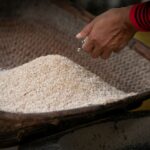
In the heart of agricultural innovation lies the intricate world of paddy processing—a crucial phase that transforms harvested grains into the edible rice staple that sustains billions. As global demand for rice continues to soar, optimizing efficiency and yield in paddy processing plants has become paramount. This article delves into the multifaceted realm of paddy processing, presenting a comprehensive analysis that encompasses cutting-edge technologies, streamlined processes, and performance benchmarks. By examining the intertwining elements that contribute to successful operations, we aim to illuminate pathways that not only enhance productivity but also ensure sustainability and quality in a sector poised for growth. Join us as we explore the methodologies that drive paddy processing into the future, revealing insights that could redefine the industryS landscape while addressing the challenges and opportunities that lie ahead.
Innovative Mechanisms and Their Impact on Paddy processing Productivity
Innovative mechanisms in paddy processing play a critical role in enhancing productivity through improved efficiency and yield. One of thes mechanisms is the adoption of Automatic Paddy Sorting Systems. These systems utilize laser technology and near-infrared spectroscopy to accurately differentiate between high-quality grains and impurities. By employing this technology, processing plants can enhance the sorting accuracy, reducing both grain damage and contamination. Performance metrics indicate that the integration of such systems can lead to a 20-30% increase in overall yield compared to conventional manual sorting methods. Additionally, reduced labor costs and decreased processing time are notable advantages from automation, although the initial investment can be a meaningful barrier for smaller operations.
Another remarkable mechanism is the Continuous Rice milling System, which streamlines the milling process while minimizing grain breakage. Unlike traditional batch milling, this system features dual roller mills that operate continuously, allowing for a more steady throughput. Key specifications of these systems frequently enough include a milling capacity of up to 1,500 kg/hour and an overall recovery rate that can exceed 68%. However, the complexity of maintaining consistent quality at high speeds poses a challenge. Technical factors such as rice moisture content,pH levels,and temperature must be closely monitored to optimize performance. A comparative analysis highlights that while continuous systems offer enhanced productivity and reduced operational costs, they require a more sophisticated skill set for operation and maintenance than simpler systems, which can impact the overall adoption rate in rural processing plants.

Evaluating Material Flow Dynamics and their Role in Yield Optimization
Material flow dynamics within paddy processing plants play a pivotal role in optimizing both operational efficiency and yield. Understanding the movement of raw materials through various stages—such as cleaning, drying, milling, and packaging—is crucial for identifying bottlenecks and enhancing throughput. Key criteria for evaluating these dynamics include:
- Flow Rate: The speed at which paddy moves from one process to another, impacting production timelines.
- cycle Time: The total time taken from the input of paddy to the output of processed rice, which affects inventory management.
- Material Loss: quantifying the loss of product at each stage helps identify inefficiencies and waste.
- equipment Utilization: Evaluating the effectiveness of machinery in processing capacity without underloading or overloading.
For instance,a comparative analysis between traditional batch processing systems and continuous flow systems can illustrate the advantages of more streamlined operations. Continuous systems reduce handling times and limit exposure to contaminants,which can lead to improved quality and yield. However, such systems may have a steeper initial investment cost and require more sophisticated monitoring technologies. Performance factors to consider include ambient environmental conditions, equipment calibration, and worker training, all of which are essential in achieving optimal performance levels. A well-balanced approach—factoring in all of these elements—can substantially enhance yield, such as switching from low-efficiency fixed bed driers to high-efficiency fluidized bed dryers, where improvements in drying uniformity and energy consumption can lead to remarkable gains in yield metrics.
Advanced Performance Metrics for Benchmarking Paddy Processing Technologies
When evaluating paddy processing technologies, advanced performance metrics are critical in benchmarking various methods to determine their efficacy in enhancing productivity and quality. Metrics such as overall equipment effectiveness (OEE), yield efficiency, and processing time serve as foundational criteria.OEE quantifies the performance of processing equipment by considering availability, performance ratio, and quality rate, providing insights into potential bottlenecks or inefficiencies. Yield efficiency is another essential metric, representing the ratio of the weight of marketable rice produced to the input weight of paddy. A typical yield efficiency can vary significantly; such as, modern milling technologies can achieve yields of over 70%, while traditional methods may yield only about 55%. Processing time, combining both milling and sorting phases, can provide comparative insights into productivity across different systems.
To dive deeper into the performance factors affecting these metrics, it is crucial to analyze specific technologies in detail, such as modern automated rice mills versus traditional stone mills. Automated systems utilize laser sorting technology,resulting in higher quality and reduced broken rice through precise grain selection. In contrast, stone mills might struggle with producing consistent quality due to manual intervention and less refined separation processes. Additionally,various operational criteria must be considered,including moisture content at input,which significantly influences milling efficiency and husk removal rates. Limitations of existing technologies include their dependency on energy inputs and raw material quality, which can impact consistency and profitability. A comparative overview of various technologies with key specifications is as follows:
| Technology | OEE (%) | Yield Efficiency (%) | Processing Time (hours/ton) |
|---|---|---|---|
| Automated Rice mill | 80 | 75 | 2 |
| traditional Stone Mill | 60 | 55 | 5 |
Engineering Insights into Quality Preservation Throughout the Paddy Processing Cycle
The quality preservation of paddy throughout the processing cycle is contingent upon engineering insights that focus on critical control points. These include moisture control, temperature regulation, and mechanical handling.The hulling process, for instance, requires precise adjustments in roller pressure and speed to minimize grain breakage. Factors to consider in this mechanism include:
- Roller design specifications: Utilizing rubber rollers can enhance grip and reduce damage compared to steel rollers.
- Moisture content: Optimal hulling is achieved when grain moisture levels are maintained between 18-22%. higher moisture can lead to increased hull adherence, while lower moisture can cause excessive cracking.
After hulling, the milling process necessitates strategic parameters to ensure that both yield and quality are maximized. The use of modern paddy separators and whitener machines can enhance the extraction of whole grains, facilitated by:
- Sieving techniques: Different mesh sizes allow for targeted separation of broken grains from whole grains.
- Airflow management: Proper airflow during polishing serves to reduce heat buildup, which can discolor rice.
Comparison of traditional milling methods against modern technologies shows that the latter not only offers higher throughputs but also reduces the risk of broken kernels, effectively preserving quality. Nevertheless,limitations such as initial setup costs and the complexity of maintenance should be factored into performance assessments. Regular calibration of machines and adherence to standard operating procedures can mitigate these limitations while enhancing process efficiency.
To Conclude
the pursuit of optimized efficiency and yield in paddy processing plants presents a complex yet rewarding challenge that can significantly impact both the agricultural economy and the livelihoods of countless stakeholders. By embracing a multifaceted approach that combines cutting-edge technologies with streamlined processes and rigorous performance benchmarks, paddy processors can unlock unprecedented levels of productivity and sustainability.
As we have explored throughout this analysis, the road to improvement is paved not only with innovative machinery and sophisticated techniques but also with a commitment to continuous learning and adaptation in response to evolving market demands. The integration of these elements creates a dynamic environment where efficiency is not merely a metric, but a culture embraced by all participants in the value chain.
Looking ahead, the successful implementation of these strategies will depend on collaboration among industry players, research institutions, and policymakers. Together, they can forge a resilient paddy processing ecosystem capable of meeting the challenges of tomorrow while ensuring food security and driving economic growth today. As we conclude this comprehensive exploration,let us remain engaged in this vital discourse,committed to advancing the future of paddy processing through informed decisions and innovative practices.