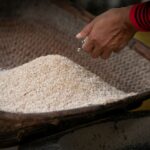
In the heart of the agricultural landscape, where tradition meets technology, lies a vital component of global food security: rice processing. As one of the world’s most consumed staple crops,rice not only sustains billions but also drives economies,particularly in regions where it is cultivated. Yet, behind the scenes of this seemingly simple grain is a complex tapestry of machinery and innovation that transforms raw paddy into the polished grains gracing our tables. This article delves into the cutting-edge advancements in rice machinery, exploring how novel techniques and state-of-the-art equipment are revolutionizing grain processing.From efficiency-enhancing technologies to lasting practices that minimize waste, join us as we unveil the innovations shaping the future of rice production and discovering the hidden heroes of this essential industry.
emerging Technologies in Rice Milling Equipment
In today’s fast-evolving agricultural landscape, rice milling equipment is undergoing a technological renaissance, driven by the need for efficiency and sustainability. Modern innovations are revolutionizing the milling process, focusing on minimizing waste and maximizing output. As an example, smart sensing technologies now monitor grain quality and moisture levels continuously, allowing mill operators to make real-time adjustments. Other advancements include automated sorting systems equipped with advanced imaging to detect impurities and foreign grains, ensuring premium quality rice for consumers. These technologies not only streamline operations but considerably reduce labor costs and processing time, making them indispensable assets in contemporary milling facilities.
Additionally, the integration of IoT (Internet of Things) in rice milling machines is enhancing operational effectiveness by providing data analytics for predictive maintenance. With real-time monitoring capabilities, mill operators can anticipate equipment failures and schedule maintenance activities accordingly, thus minimizing downtime. Moreover, renewable energy solutions, such as solar-powered milling systems, are gaining traction, contributing to sustainability goals while reducing operational costs. As rice milling equipment evolves, these emerging technologies are not just shaping productivity but also paving the way for a more environmentally friendly approach in grain processing.

Sustainable Practices in Grain Processing
As the demand for sustainable agricultural practices grows, innovations in grain processing are leading the way toward greener solutions. Energy efficiency stands as a key focus, with new machinery designed to minimize power consumption while maximizing output. Equipment now often utilizes advanced technologies such as smart sensors and automated controls to optimize processing parameters and reduce waste. Furthermore, the integration of renewable energy sources, such as solar and wind, into grain processing facilities supports a reduction in carbon footprints, making these operations more eco-friendly.
Another vital aspect contributing to sustainability in grain processing is the emphasis on waste management and resource recovery. By adopting circular economy principles, producers can convert by-products like husks and bran into value-added materials.This not only decreases landfill waste but also creates new income streams. Some of the innovative solutions currently being implemented include:
- Biomass Energy Generation: Using organic by-products to generate renewable energy.
- Organic Fertilizers: Transforming rice husks into nutrient-rich soil amendments.
- Water Recycling Systems: implementing systems that treat and reuse water throughout the processing cycle.
| Innovation | Benefit |
|---|---|
| Smart Sensors | Enhances energy efficiency and reduces waste. |
| Biomass Conversion | Generates energy while minimizing by-product waste. |
| Water Recycling | Conserves resources and cuts processing costs. |
Streamlining Operations with automation Solutions
In the ever-evolving landscape of grain processing, leveraging automation solutions has emerged as a pivotal strategy for enhancing efficiency and productivity. By integrating cutting-edge technologies into operations, companies can streamline workflows, reduce human error, and significantly bolster output. Automation not only simplifies complex processes but also allows for real-time monitoring and data analysis, providing critical insights that drive better decision-making. Some of the noteworthy benefits of deploying automation include:
- Increased Efficiency: tasks that traditionally relied on manual labor can now be executed promptly and accurately.
- Cost Reduction: automation decreases the need for extensive manpower, leading to considerable savings over time.
- Consistency and Quality Control: automated systems deliver uniform results, ensuring compliance with industry standards.
Moreover, adopting automation solutions leads to enhanced scalability within grain processing operations.As demand fluctuates, businesses can swiftly adapt their processes through automated technologies, whether that means ramping up production or adjusting supply flow. This versatility is increasingly vital in a market characterized by unpredictability. For a clearer illustration, consider the following table showcasing key automation tools and their associated advantages:
| Automation Tool | Advantages |
|---|---|
| Automated Sorters | Enhances sorting speed and accuracy |
| Robotic Harvesters | Reduces harvest time and labor costs |
| Data Monitoring Systems | Provides real-time analytics for better decision-making |
Enhancing Quality control in Rice Production
The journey from paddy to polished rice requires rigorous oversight to ensure quality at every stage of production.Modern advancements in machinery have revolutionized conventional practices, enabling producers to enhance their quality control efforts significantly. With automated grading systems, these machines analyze color, size, and weight, allowing for precise separation of high-quality grains from defectives. The implementation of high-tech optical sorters further streamlines this process, utilizing refined imaging technologies to detect imperfections and foreign materials in real-time — eliminating human error and ensuring optimal output.
Investing in grain conditioning equipment is another strategic approach that elevates quality standards. This machinery maintains appropriate moisture levels and temperature, preventing spoilage and promoting uniformity in grain quality. Furthermore, employing data analytics tools in conjunction with these systems provides producers with actionable insights into their operations, enabling continuous improvement. By integrating such technological innovations, producers not only uphold quality but also enhance overall efficiency, leading to substantial benefits in both market value and consumer satisfaction.
Final Thoughts
As we wrap up our exploration of the latest advancements in rice machinery and grain processing, it’s clear that innovation is at the heart of this vital industry.From precision equipment that enhances efficiency to sustainable practices that echo a commitment to environmental stewardship, the future of rice processing is luminous and full of promise.
These cutting-edge technologies not only elevate the quality of the grains we consume but also support the livelihoods of farmers and producers across the globe. As we continue to unveil and embrace these innovations, perhaps it’s their transformative potential that we should celebrate most—turning age-old practices into modern marvels capable of meeting the demands of a growing population.
As the rice machinery landscape evolves, we’re not just witnessing a revolution in processing; we are participating in a significant shift toward greater sustainability, quality, and accessibility in our food systems. In this dynamic interplay of tradition and technology, the grains of tomorrow are being cultivated today, ensuring that every bowl of rice tells a story of progress and possibility. Let us remain curious about what lies ahead and the role these advancements will play in shaping the grains on our tables for generations to come.