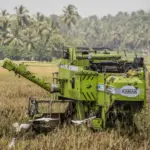
In a world where the balance between feeding a growing population and preserving the planet’s resources hangs delicately, agriculture stands at a crucial crossroads. Among the many staples that nourish billions,rice reigns supreme,serving not only as a dietary foundation but also as a cultural symbol across diverse societies. However,the traditional processes that have sustained rice cultivation for generations are increasingly strained by the challenges of climate change,dwindling arable land,and the demand for enhanced productivity. Enter the age of innovation: advanced rice processing machines. These cutting-edge technologies promise to revolutionize the way we harvest, process, and consume rice, optimizing production while minimizing environmental impact. As we delve into the pivotal role of these machines in sustainable agriculture, we explore how their adoption could not only elevate yields but also promote ecological harmony, ensuring that future generations can savor the bounty of this essential grain.
Navigating the Double-Edged Sword of Automation: The Unseen Impacts of Advanced Rice Processing
As advanced rice processing technologies gain traction, they present both profound benefits and notable challenges.It’s essential to dissect the implications of automation beyond the surface-level efficiency gains. Farmers often assume that higher productivity equates to sustainability; however, this can overlook critical factors such as labour displacement, socio-economic impacts, and the long-term health of ecosystems. The mechanization hype risks romanticizing industrial growth while neglecting the nuanced realities faced by smallholder farmers. As a notable example, while these machines can reduce post-harvest losses substantially, they can also exacerbate income inequality, particularly when financial resources limit small-scale farmers’ access to such technologies.
Furthermore, the environmental footprint of automation merits scrutiny. While advanced rice processing promises reduced chemical usage and enhanced resource efficiency, it’s pivotal to remember that reliance on technology can cultivate new vulnerabilities. A balance must be struck between adopting mechanization and preserving traditional agricultural knowledge and practices. Stakeholders should consider:
- Integrating Traditional Practices: Combining modern technologies with indigenous farming methods can foster resilience against environmental pressures.
- Investment in Training: Upskilling local farmers to use and maintain advanced machinery enhances their agency and minimizes reliance on external aid.
- Stakeholder Collaboration: Engaging community stakeholders in decision-making ensures that the shift toward automation aligns with local needs and enhances social equity.
By acknowledging these trade-offs and actively mitigating potential pitfalls, the agricultural community can harness the benefits of advanced rice processing while promoting a more inclusive and sustainable model of production.

Beyond the Hype of Technological Solutions: A Critical Look at the Limits of Modern Rice Milling
The allure of advanced rice milling technology frequently enough masks the complex realities of its implementation. While modern machines promise efficiency and higher yields, it’s essential to acknowledge the inherent limitations. An over-reliance on technological solutions can lead to several pitfalls:
- Initial Investment Costs: High-tech milling equipment demands significant capital investment, possibly alienating smallholder farmers who may not have access to credit.
- Technical Knowledge Gap: Complex machinery often necessitates specialized knowledge for operation and maintenance, which can be a barrier in regions lacking adequate training programs.
- environmental Impact: Increased energy consumption associated with high-capacity mills can offset gains made through higher productivity if option energy sources are not utilized.
Moreover, the promise of automation can inadvertently create dependencies that are detrimental in the long run. For instance, while mechanization can drastically reduce labor costs, it may also lead to unemployment in rural communities reliant on traditional milling practices. Therefore, a nuanced approach is required when integrating modern technology into rice processing. Stakeholders should consider a tiered approach that includes:
| Strategy | Description |
|---|---|
| Incremental Upgrades | Investing in affordable, incremental technology that enhances, rather than replaces, traditional methods. |
| Training Programs | Establishing education initiatives that empower farmers to use and maintain modern technology effectively. |
This balanced strategy not only facilitates the transition to modern milling practices but also reassures the sustainability of local economies and ecosystems.
Balancing Efficiency and Employment: The Trade-Offs of Integrating high-Tech Innovations in Agriculture
The integration of high-tech innovations in agriculture, particularly in rice processing, represents a paradigm shift that emphasizes both efficiency and sustainability.However, this shift brings forth a complex interplay between technological advancement and employment concerns. Agricultural high-tech tools, such as automated harvesters and advanced processing machines, can significantly boost productivity and reduce post-harvest losses. Yet, the benefits must be tempered with a careful evaluation of labor implications:
- Increased Efficiency: Automation can lead to faster processing times and lower operational costs, enhancing the overall yield. Systems that optimize water usage and energy consumption align with sustainable practices, potentially minimizing environmental impact.
- Job Displacement vs.Job Creation: While some traditional roles may vanish, new opportunities may arise in tech maintenance, training, and data analysis. The challenge lies in managing the transition for workers displaced by innovation, necessitating the development of retraining programs.
- Equity in Access: Smallholder farmers frequently enough lack the capital to invest in advanced machinery,creating a widening gap. Policymakers should consider subsidizing access to these technologies to promote equitable benefits across different scales of farming.
Moreover, as we navigate this technological landscape, distinguishing between mere efficiency gains and holistic agricultural development becomes critical.It is essential to recognize that high-tech solutions should not perpetuate a cycle of dependency but rather enhance existing practices:
| Aspect | Before Tech Adoption | After Tech Adoption |
|---|---|---|
| Labor Intensity | High | Moderate |
| Input Costs | Variable | Reduced |
| Productivity | Lower | Higher |
To foster a balanced approach, it’s vital for stakeholders—governments, NGOs, and agribusinesses—to collaborate on creating policies that advocate for both technological adoption and workforce resilience. Emphasizing continuous learning and adaptive skill-building can ensure that agricultural workers are not left behind,turning potential threats of displacement into opportunities for societal advancement.
Reassessing Sustainability Metrics: How New Processing Machines Could mislead Our Definition of Green farming
The recent surge in advanced rice processing machines has undoubtedly spurred optimism regarding agricultural efficiency and sustainability. However, as we evaluate their ecological impact, it is crucial to scrutinize the metrics we use to define ‘green farming’.Many existing sustainability metrics focus predominantly on output and efficiency, often overlooking critical dimensions such as energy consumption, waste generation, and social equity. The overemphasis on productivity can lead to a false narrative of sustainability where high-efficiency machines are touted as environmentally friendly without a comprehensive assessment. For example, a machine that drastically reduces processing time might also increase electricity demand significantly, rather negating its environmental benefits.
Moreover, the allure of state-of-the-art processing technology often masks underlying complexities and trade-offs inherent in their adoption. Farmers may be led to assume that higher initial investments in advanced technology will deliver unequivocal long-term sustainability benefits. Yet, these decisions should consider:
- Lifecycle Analysis (LCA): Machines may appear efficient but have hidden costs in their production and eventual disposal.
- Resource Equity: Are these machines accessible to smallholder farmers, or do they reinforce existing disparities?
- Soil Health and Biodiversity: Do new processing methods prioritize one crop at the expense of crop rotation and biodiversity?
A balanced approach would encourage stakeholders to champion a framework that integrates qualitative factors alongside traditional productivity measures, promoting sustainable practices tailored to diverse agricultural ecosystems rather than imposing a one-size-fits-all solution. investing in grassroots education and flexible technology that smallholder farmers can manage will be paramount in avoiding the pitfalls of a tech-centric vision of sustainability.
Concluding Remarks
the journey towards sustainable agriculture is paved with innovation and progress. Embracing advanced rice processing machines stands at the forefront of this revolution, offering a pathway to not only enhance efficiency but also to safeguard our planet’s resources. As we cultivate the fields of tomorrow, these cutting-edge technologies promise to bridge the gap between tradition and modernity, enabling farmers to maximize yields while minimizing environmental impact. By investing in these solutions, we are not just harvesting rice; we are reimagining the future of farming itself. The seeds we plant today within the realm of agricultural technology will yield a sustainable legacy for generations to come. Together, let us nurture this movement that celebrates the synergy of nature and science, ensuring food security and ecological balance for our ever-evolving world.