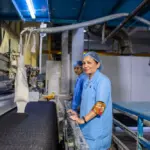
In the heart of rural landscapes where emerald fields sway under the sun, rice is celebrated not just as a staple food but as a cultural cornerstone that nourishes billions. Yet, behind the serene visage of rice cultivation lies a transformative force reshaping the agricultural economy adn the future of global food security: modern rice processing plants. These state-of-the-art facilities are revolutionizing the way this vital grain is harvested, processed, and distributed, bridging the gap between customary practices and contemporary demands. As they harness advanced technologies and innovative methodologies, these processing plants are not only enhancing the efficiency and quality of rice production but are also carving new pathways for economic growth and resilience in farming communities. Join us as we explore the intricate interplay between rice processing advancements and their far-reaching implications for agricultural economies and the collective quest for food security in an ever-evolving world.
Revolution or Ruse: Deconstructing the Economic Myths of Modern Rice Processing
While modern rice processing plants are often heralded as revolutionary in enhancing food security and agricultural efficiency, this narrative merits a critical examination.The proliferation of industrial-scale rice mills has certainly introduced advanced technologies and streamlined operations. However,the assumption that such advancements universally benefit smallholder farmers and local economies does not hold up under scrutiny. Rather, these processing plants can drive a wedge between local agricultural producers and the market, as they frequently enough favor larger commercial operations capable of supplying the volume demanded by these high-tech facilities. This trend leads to a concentration of power in a few corporate entities,perhaps sidelining smallholder farmers who may lack the capacity to engage competitively.
Moreover, the environmental implications of modern rice processing also warrant serious consideration.The methods that improve yield and efficiency often overlook sustainability, increasing reliance on chemical inputs and water-intensive cultivation techniques.A nuanced approach must recognize the trade-offs among productivity, sustainability, and socio-economic equity. Stakeholders should pursue strategies that incorporate lasting practices, such as agroecological approaches, which can reconcile the need for increased production with environmental stewardship. Additionally, fostering cooperative models may help ensure that smallholders gain access to processing facilities and market opportunities.evaluating these dimensions requires a deeper dialog on the economic myths surrounding modern rice processing and a commitment to inclusivity that genuinely expands food security rather than merely reshuffling the existing power dynamics.
Unearthing the hidden Costs: The Environmental Trade-offs of high-Tech Rice Plants
High-tech rice processing plants, while heralded for their efficiency and potential to bolster food security, mask hidden environmental costs that often go unrecognized. The industrialization of rice production relies heavily on advanced technologies such as genetically modified organisms (gmos), agrochemicals, and intensive agricultural practices that claim to enhance yield. Though, this comes with meaningful trade-offs:
- Soil Degradation: The reliance on monoculture and chemical fertilizers leads to the depletion of essential nutrients, resulting in long-term soil health decline.
- Water Resource Strain: high-tech rice plants often demand increased irrigation, exacerbating water scarcity in regions already facing drought or over-extraction issues.
- Biodiversity Loss: The focus on high-yield varieties tends to push out native species, undermining the ecosystem’s balance and resilience against pests and diseases.
These hidden costs prompt a reevaluation of assumptions regarding the sustainability of high-tech solutions in agriculture. A deeper understanding of integrated farming systems could provide a counter-narrative to conventional methods. By incorporating traditional practices such as crop rotation, ecological pest management, and organic amendments, farmers could restore and enhance soil health while conserving water. Furthermore, the shift towards permaculture principles offers an innovative path: these systems integrate natural processes, recognizing the interconnectedness of crops and their environment. Ultimately, a balanced approach that includes both modern technology and sustainable practices can fortify food security without compromising the ecological integrity of agricultural landscapes.
The Rise of Automation: How Smart Processing Is Redefining Smallholder Dynamics
the integration of automation in rice processing plants marks a pivotal shift in the way smallholder farmers interact with markets, production efficiencies, and resource allocation. Traditionally, smallholders have conducted operations with a manual, cumbersome approach that often resulted in high labour costs and inconsistent product quality. However, the rise of smart processing technologies has begun to challenge this status quo by introducing precision and scalability into the agricultural value chain. key advancements include:
- Automated sorting and grading: Modern technologies utilize sensors and AI to assess grain quality, ensuring that only the highest standard rice is marketed.
- Data-driven decision making: Advanced analytics provide insights into optimal planting, harvesting, and processing times tailored for local conditions, leading to better yields.
- Resource efficiency: Automation often leads to reduced runoff and waste, aligning profitability with sustainability goals.
However, while automation offers myriad benefits, the transition is not without its trade-offs. Smallholders must grapple with the costs associated with upgrading their processes, which can create initial barriers that render them vulnerable if not strategically managed. Additionally, there is an inherent risk that increased automation might exacerbate economic disparities, leaving the most resource-poor farmers even further behind. It is vital for governments and organizations to support smallholders through accessible financing options, training programs, and cooperative frameworks that balance technological advancement with social equity. Establishing these infrastructures will empower smallholders to not only embrace automation but also to actively participate in shaping the future of agriculture, ensuring that economic transformations lead to enhanced food security for all.
Food security in the Balance: Weighing Efficiency Against Nutritional Value in Rice Production
The ongoing debate around food security frequently enough juxtaposes efficiency and productivity against the nutritional quality of staple crops like rice. Modern rice processing plants are adept at maximizing yield and reducing post-harvest losses, yet this relentless pursuit of efficiency may come at the expense of the grain’s nutritional integrity. For instance, the milling process can strip rice of essential nutrients, such as B vitamins and iron, which are critical for many populations that rely predominantly on rice as their main food source. This creates a tension where the immediate benefits of increased productivity must be scrutinized against the long-term health outcomes associated with consuming nutrient-poor grains.
- reassessing Milling practices: Elevating nutritional content should not be an afterthought. Adoption of whole grain or parboiled rice milling techniques can preserve more vitamins and minerals, offering a viable alternative to white rice.
- Diversifying Crops: With climate change and evolving consumer preferences, it’s prudent to consider integrating legumes or fortified rice into production systems. Such diversification not only enhances dietary variety but also provides resilience against pest and climate shocks.
- Policy Collaboration: stakeholders—farmers, processors, and governments—should unite to incentivize improvements in processing methods that prioritize public health alongside economic gains, establishing a standard for balancing efficiency with nutritional value.
This balancing act requires nuanced strategies that do not compromise either aspect. While efficiency is crucial for food production in a world facing an ever-growing population, it should not overshadow the importance of nutrient-dense food sources. modern rice processors must recognize that investing in nutritional quality can be economically advantageous in the long run, potentially reducing healthcare costs associated with deficiencies and promoting a healthier, more productive society.
To Conclude
As we step back from the intricate tapestry of modern rice processing, it’s clear that the evolution of these facilities transcends mere technological advancement—it encapsulates a transformative shift in agricultural economics and food security. By harnessing innovation and efficiency,today’s rice plants are not just processing food; they are reshaping livelihoods,fortifying communities,and redefining the very framework of global food systems.
As we look to the future, the implications of these changes will resonate far beyond the silos and processing lines. They have the potential to unlock resilient pathways to sustainability, empowering farmers and consumers alike in a world increasingly challenged by climate change and population growth. The journey beyond grain is not just about what happens to rice; it’s about nurturing a vision for a more secure and equitable food future.
In this era of transformation, each grain tells a story—of progress, potential, and purpose.As stakeholders across the spectrum continue to explore these developments, we are reminded that the future of food security lies in our hands, ready to be harvested with innovation, collaboration, and a commitment to a better tomorrow.