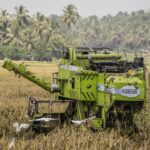
In an era marked by pressing environmental challenges adn an ever-growing global population,the quest for sustainable food security has never been more critical. Among the staples that nourish billions, rice stands out not just as a dietary cornerstone but as a symbol of cultural heritage and agricultural tradition. However, the journey of rice from field to fork often bears the weight of inefficiencies and waste, calling for a transformative rethinking of its processing methods. This article delves into the intricate pathways of rice cultivation and processing, exploring innovative practices and technologies that promise to enhance sustainability. By redefining the way we approach rice processing, we hold the potential not only to reduce waste and improve nutritional value but also to fortify the resilience of food systems worldwide. Join us as we unravel the complexities of rice production and examine how a shift in processing techniques may well be the key to unlocking a more secure and sustainable food future.
Revolutionizing Agricultural Practices: The Unseen Environmental Costs of Conventional Rice processing
The conventional processing of rice has long been considered a necessary evil in the quest for quality and efficiency. Though, this practice can have notable yet frequently enough overlooked environmental repercussions that warrant critical examination. Customary methods, which might prioritize yield over ecological integrity, frequently enough lead to a range of adverse environmental impacts, including:
- Water Depletion: Conventional rice milling consumes vast amounts of water, exacerbating the issue of water scarcity, particularly in regions already facing hydric challenges.
- soil Degradation: The heavy reliance on chemical fertilizers and pesticides during both cultivation and processing diminishes soil health over time, leading to diminished crop yields and increased agricultural dependency.
- Greenhouse Gas Emissions: The machinery and energy-intensive processes involved in traditional rice processing contribute considerably to carbon emissions, raising concerns amid growing climate change effects.
It is crucial to distinguish between traditional practices that are culturally entrenched and those that perpetuate ecological harm. Transitioning towards more sustainable practices—such as integrated rice-fish systems or using renewable energy in processing—can mitigate these environmental costs. to realize these benefits, stakeholders must consider a nuanced approach that weighs trade-offs carefully. For instance, while organic processing may enhance soil health and reduce pesticide use, it often leads to lower yields, thus challenging food security in the short term. Recommendations include investing in research and growth of eco-pleasant milling technologies, providing incentives for sustainable practices, and encouraging farmer cooperatives to adopt innovative, holistic approaches that emphasize both environmental stewardship and economic viability.

Beyond Yield: The Cultural Implications of Modernizing Rice Processing for Global Food Security
The modernization of rice processing goes far beyond merely enhancing yield; it unravels intricate cultural and social dimensions that underpin food security worldwide.Emphasizing technological advancements such as mechanization, digital tracking, and value-added processing can inadvertently overlook the rich tapestry of traditional practices that not only sustain local economies but also reinforce community identity. Advanced machinery may increase efficiency, yet it runs the risk of eroding these cultural practices, sparking a dissonance between modernity and tradition. Stakeholders must recognize that the introduction of new technologies should not be a one-size-fits-all approach but rather a carefully calibrated integration that respects local customs and promotes sustainable practices.
- Incorporate traditional techniques: Blending modern processes with age-old methods can enhance cultural relevance while improving productivity.
- Educate communities: Increase understanding of the benefits of modern technologies and encourage local ownership of these innovations.
- Encourage grassroots involvement: Engage local farmers in decisions regarding technological implementation to ensure alignment with community values.
moreover, the economic implications of modernizing rice processing cannot be dismissed lightly. Enhanced processing facilities can improve income levels for rice farmers, yet they also bring forth a distinct set of challenges. Access to markets, capital investment, and skills training frequently enough dictate whether modernization leads to equitable food security. A nuanced understanding of these trade-offs reveals that prioritizing access to resources and training is as essential as technological advancement. policymakers should not only focus on infrastructure but also foster networks that connect farmers to markets and enhance thier bargaining power. Balancing these competing needs will define the sustainability of food security initiatives, crafting a landscape in which modernization supports and uplifts existing agricultural frameworks rather then dismantles them.
Challenging Assumptions: The Overlooked Nutritional Trade-offs in Automated Rice Production
As automated rice production continues to gain momentum,it’s essential to challenge widely held assumptions regarding its nutritional impact. The common belief is that higher yields translate automatically to improved food security. Though, this overlooks critical nutritional trade-offs associated with the mechanization and standardization of rice cultivation. For instance, while automated processes can indeed increase quantity, they often prioritize high-yield varietals that may lack essential micronutrients compared to traditional varieties. Consequently, the potential for diminished nutritional quality must be equitably weighed against sheer volume of production. A nuanced approach is required to enhance both yield and nutrition, potentially slow-cooking innovative measures such as:
- Integrating heirloom and fortified varieties: Cultivating a diverse range of rice types can enhance micronutrient levels and reduce vulnerability to pests and diseases.
- Improving soil health: Employing precision agriculture and soil amendments can contribute to higher nutrient density in rice crops, aligning quality with quantity.
- Monitoring nutritional outcomes: Implementing a robust framework for tracking the nutritional profiles of harvested crops can inform future varieties and agricultural practices.
Moreover, the assumptions surrounding labour and mechanization necessitate rigorous examination. While automation is often heralded as a means to reduce labor costs and increase efficiency, it can inadvertently lead to a disconnection from sustainable farming practices. Smallholder farmers,who have historically employed rich,diverse cultivation techniques,may find themselves increasingly marginalized within this framework.There is an urgent need for systems that do not simply replicate industrial models but rather embody a sustainable ethos. This can involve:
- Encouraging cooperative farming models: These can combine modern techniques with traditional knowledge, ensuring that sustainability remains at the forefront.
- Investing in farmer education: Training and resources on integrating automation in sustainable ways promote holistic practices that enhance both productivity and sustainability.
Recognizing these interconnected issues can pave the way for a more equitable and nutritionally aware approach to rice production that could redefine food security in the 21st century.
Innovation vs. Tradition: Balancing Technological Advancement with Community Sustainability in Rice Processing
The tension between innovation and tradition within rice processing is emblematic of broader debates surrounding technological advancement and community sustainability.Proponents of cutting-edge techniques frequently enough highlight the potential for increased yields and efficiency, citing examples such as mechanized paddy harvesting and AI-driven quality control systems. However, these innovations frequently come with trade-offs that can alienate traditional farming communities, particularly when they prioritize profit margins over local practices. As a notable example, the rush towards commercial-scale operations can lead to:
- Loss of traditional knowledge: Cultural practices and indigenous techniques may wane as modern practices overshadow them.
- Environmental degradation: Intensive farming technologies can deplete natural resources, undermining long-term sustainability.
- Social disenfranchisement: Smallholder farmers may be pushed out of the market,exacerbating poverty and inequality.
To find a balanced approach,stakeholders must champion a model that integrates innovative methodologies while respecting local wisdom. This can be achieved through:
- Collaborative platforms: Create forums where technologists and traditional farmers can share insights, fostering mutually beneficial partnerships.
- Localized adaptations: Customize advanced technologies to suit the specific ecological and cultural contexts of rice communities.
- Dual-driven metrics: Evaluate success not only through productivity and profit but also by measuring social well-being and environmental health.
In promoting such a framework, the rice industry can advance towards a model that secures food sustainability without sacrificing the rich cultural heritage and ecological integrity upon which it is built.
Future Outlook
the journey of rice—from sun-drenched fields to our dining tables—offers a compelling narrative of potential and obligation. As we have explored, redefining rice processing is not merely a step in agricultural innovation but a critical pivot toward sustainable food security. By embracing holistic approaches that prioritize efficiency, waste reduction, and nutritional enhancement, we can unlock the full promise of this staple food.
The challenges we face are formidable,from climate change to rising global populations,but the solutions are within our reach. By investing in advanced processing techniques and fostering collaboration among farmers, scientists, and policymakers, we can create systems that nourish both people and the planet.
Let us view each grain of rice not just as sustenance,but as a symbol of our commitment to a sustainable future. Together, we can cultivate not only food security but also a legacy of stewardship for generations to come. With every thoughtful effort in reimagining rice processing, we take a step closer to an equitable and resilient food system that honors the intricate connection between agriculture, environment, and humanity. The field, it truly seems, is ripe for change.