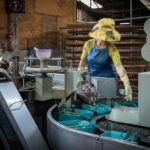
In the heart of countless rural landscapes, the humble paddy field flourishes, embodying a time-honored tradition that sustains millions around the globe. Each grain of rice holds the promise of nourishment, culture, and economic vitality. Yet, beneath the surface of its delicate exterior lies a complex journey from field to table, one that is frequently enough overlooked in the hustle of modern agriculture. Efficient paddy processing emerges as a crucial pillar in this transformative journey, bridging the gap between raw grains and the high-quality rice that graces our plates. This article delves into the intricate world of paddy processing, exploring innovative techniques and sustainable practices that enhance efficiency while preserving the integrity of this staple food. Join us as we unravel the secrets behind turning paddy into pristine rice, highlighting the advancements and methodologies that not only boost yield but also contribute to food security and sustainable development.
Harnessing Advanced Technology for Optimal Paddy Processing
In the quest for high-quality rice production, the integration of cutting-edge technology into paddy processing is revolutionizing the industry.Advances such as automated milling systems, which utilize precision-engineered components, ensure that grains are hulled and polished consistently, leading to maximized yield and minimized waste. Furthermore, the implementation of digital monitoring systems allows for real-time adjustments and diagnostics, assuring that each stage of the processing is optimized for efficiency and quality. These technologies work in synergy to maintain the integrity of the rice while also adhering to stringent food safety standards.
The benefits of these technological innovations extend beyond mere efficiency; they foster sustainability in rice production. For example,modern paddy processing facilities are increasingly adopting energy-efficient machines and employing waste-reduction strategies. This not only reduces the carbon footprint but also lowers operational costs. Key features include:
- Smart Sensors: Monitor grain quality and automate adjustments.
- Recycling Systems: Utilize by-products effectively,such as turning husk into biofuel.
- Data Analytics: Analyze processing data to predict trends and improve future outputs.
As this technological shift takes hold, the industry is poised for enhanced productivity and sustainability, ultimately benefiting farmers and consumers alike.

Understanding the Role of Quality Control in Rice Production
Quality control is a pivotal element in the journey from paddy to polished rice, ensuring that every grain meets the standards expected by consumers. This process includes a series of meticulous checks and evaluations that assess the quality at various stages of production.From the point of harvesting to the final packaging, each step is monitored to minimize defects and maximize the nutritional value, taste, and presentation of the rice. Essential practices in quality control involve:
- Sampling and Testing: Regular sampling of paddy for moisture content and insect infestation ensures the grains remain uncontaminated.
- Grading: Sorting grains based on size, color, and impurities to guarantee uniformity.
- Hygiene Monitoring: Ensuring that processing units adhere to strict sanitation protocols to prevent contamination.
Moreover, advanced technology has revolutionized quality control procedures, allowing for real-time monitoring and data collection that informs decision-making. Quality control labs often utilize equipment for rapid analysis, such as near-infrared spectroscopy, enabling rapid assessments of grain quality. This outlines why maintaining standards is not merely about adhering to regulations; it signifies a commitment to excellence that drives consumer trust. Important aspects of quality assurance include:
| Element | Importance |
|---|---|
| Moisture Control | Prevents spoilage and enhances shelf life. |
| Contaminant Inspection | Safety for consumers and avoidance of recalls. |
| Packaging Quality | presents the product attractively and prevents damage during transport. |
Sustainable Practices to Enhance Efficiency in Rice Milling
Implementing sustainable practices in rice milling offers a pathway to enhance both operational efficiency and environmental responsibility. One key strategy involves optimizing energy usage through the adoption of energy-efficient machinery. Modern milling operations can utilize equipment with advanced energy management systems, which not only reduce electricity consumption but also minimize unnecessary wear and tear. Additionally, recycling waste products is another effective measure; husks and bran can be repurposed into bioenergy, promoting a circular economy within the milling process.
Moreover, maintaining water efficiency is crucial in rice milling, as excessive water usage can lead to both operational waste and environmental imbalance. Introducing water recirculation systems can drastically reduce overall water consumption, while also ensuring that the grains are milled effectively. Beyond this, staff training focused on sustainable handling techniques encourages a culture of efficiency and awareness, aligning human resources with environmental goals. By focusing on these methods, milling operations can create a robust framework for not just processing rice, but also cultivating a sustainable future in agriculture.
Innovative Techniques for Maximizing Yield and Reducing Waste
In the quest for efficient paddy processing, innovative techniques have emerged, dramatically optimizing yield while minimizing waste. One significant advancement is the implementation of precision agriculture, which utilizes data analytics and technology to monitor crop health and growth conditions in real time. This approach allows farmers to apply inputs,such as fertilizers and water,precisely when and where they are needed,thus reducing excess and ensuring that resources are not squandered. incorporating sustainable practices such as crop rotation and integrated pest management further enhances productivity by promoting soil health and reducing reliance on chemical inputs.
Moreover, adopting advanced milling technologies can drastically improve the quality of the final product while cutting down on by-products and waste. For instance, modern husking machines are designed to efficiently seperate grain from husks with minimal damage to the rice kernels, ensuring maximum output. The integration of bioenergy systems allows mills to convert waste generated during processing, such as husks and bran, into energy, creating a closed-loop system that powers the operation without relying on external sources. The table below illustrates some of the top techniques currently implemented for yield maximization and waste reduction:
| Technique | Description | Impact on Yield/Waste |
|---|---|---|
| Precision Agriculture | Real-time monitoring of crop conditions | Increases yield, reduces input waste |
| Modern Husking machines | Efficient separation of grain with minimal damage | Maximizes output, minimizes grain loss |
| Bioenergy Systems | Converts milling by-products into energy | Reduces waste, promotes sustainability |
Concluding remarks
the journey from paddy to polished rice is a captivating interplay of tradition, technology, and innovation. As we have explored, efficient paddy processing not only ensures the preservation of nutritional quality but also enhances the economic viability of rice production. By adopting modern methodologies while respecting age-old practices, stakeholders in the rice industry can achieve a harmonious balance that benefits farmers, consumers, and the environment alike.
As we look to the future,the emphasis on sustainable processing techniques will undoubtedly play a pivotal role in meeting the demands of a growing global population. Embracing advancements in technology while nurturing our agricultural roots will enable us to transform grains into quality rice more effectively than ever before.Ultimately, the continued evolution of paddy processing stands as a testament to our resilience and ingenuity in cultivating one of the world’s most essential crops.