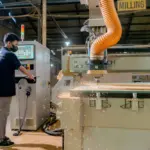
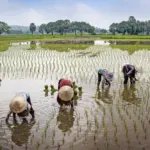
In the modern landscape of food production, cereal processing stands as a cornerstone of both sustenance and innovation. As the demand for healthier, more nutritious food options escalates globally, the industry finds itself at a critical juncture, where efficiency and quality are paramount. This article delves into the intricate world of cereal processing,exploring the precision techniques that sharpen productivity and enhance performance metrics essential for decision-making in production. By dissecting the various factors that influence operational efficiency, our review aims to illuminate the pathway toward not only optimizing output but also ensuring the sustainability of cereal processing practices. Join us as we navigate through the technical intricacies and strategic considerations that define the future of this vital sector, redefining what it means to process cereal in the 21st century.
Enhancing Yield through Advanced Cereal Processing Mechanisms and Material Interactions
Enhancing yield in cereal processing requires a thorough understanding of various advanced mechanisms and material interactions that influence the structural integrity and quality of the final product.Mechanisms such as extrusion cooking and dry milling play pivotal roles in modifying cereal grains. extrusion, which combines heat and mechanical stress, facilitates the gelatinization of starches, making nutrients more bioavailable and increasing the digestibility of the final product. This process can yield higher protein concentrations, improve flavor profiles, and enhance nutrient retention. Similarly, dry milling, through the application of precise grinding techniques, enables the efficient separation of endosperm, germ, and bran, optimizing flour quality by precisely controlling particle size distributions. Criteria such as moisture content, temperature settings, and milling duration are critical to achieving desired characteristics and shoudl be rigorously tested to ensure uniformity across batches.
In terms of material interactions, the incorporation of additives such as enzymes, emulsifiers, and othre functional ingredients can considerably alter cereal functional properties. Enzymatic treatments, for instance, can enhance the viscosity and texture of doughs, while emulsifiers improve moisture retention and extend shelf life. when selecting additives, performance factors including dosage, compatibility, and interaction with existing ingredients must be carefully evaluated. The following table summarizes key performance metrics associated with various processing mechanisms:
| Processing Mechanism | Yield Improvement (%) | Limitations |
|---|---|---|
| Extrusion | 15-30 | Temperature control challenges |
| Dry Milling | 10-20 | Potential for oxidation during processing |
| Enzymatic Treatment | 5-15 | Cost of enzymes and substrate specificity |
Ultimately, optimization of yield through these mechanisms necessitates a precise balance of experimentation and analytical measurement of production conditions, alongside a thorough assessment of the material interactions at play. The challenges associated with achieving optimal conditions require a multi-faceted approach involving continuous monitoring of performance metrics, integrating feedback to refine processes, and adapting to variations in raw material quality.

Evaluating Performance Metrics in Cereal Production: Trade-offs and Engineering Decisions
In evaluating performance metrics for cereal production, it is crucial to balance various trade-offs and engineering decisions that directly impact productivity, quality, and sustainability. Key performance indicators (KPIs) in this domain include yield efficiency, processing time, energy consumption, and product quality, each influencing operational decisions. As a notable example, optimizing yield efficiency involves analyzing the ratio of output (processed cereal) to input (raw materials, labor, and energy). Organizations frequently employ metrics like Overall Equipment Effectiveness (OEE), which combines availability, performance, and quality, to comprehensively gauge production effectiveness. though, maximizing OEE may inadvertently lead to longer processing times if not finely tuned, which emphasizes the need for critical decision-making in workflow structuring and resource allocation.
Moreover,engineers face the challenge of integrating technology that supports advanced analytics while maintaining cost efficiency. Automation and precision agriculture systems can enhance measurement accuracy and reduce waste, yet their high initial investment may deter implementation. It is essential to also consider the following limitations and trade-offs:
- Trade-offs in product quality: Higher processing speeds may compromise nutritional content and flavor.
- Energy costs vs. production rates: Increased energy use to improve throughput can diminish overall profitability.
- Technological integration costs: Implementing IoT and AI can yield gains but often at a notable capital expense.
Balancing these factors requires ongoing assessments against predefined specifications, such as desired output metrics and sustainability goals. Comparative analysis between different production methodologies—like traditional mechanical processing versus advanced hybrid systems—also plays a vital role. as a notable example, while traditional methods might be less energy-intensive, hybrid systems may offer faster throughput and better material recovery rates, albeit at an operational cost. Ultimately,the interplay of these performance metrics and trade-offs will dictate the engineering decisions that lead to optimized cereal processing,driving greater production efficiency while ensuring product integrity.

Structural Integrity and Quality Control: Balancing Efficiency and Product Expectations in Cereal processing
Structural integrity and quality control are paramount in cereal processing, as they directly influence both product quality and operational efficiency. Key mechanisms in ensuring structural integrity include the use of advanced packaging techniques, such as modified atmosphere packaging (MAP), which minimizes oxidative degradation, and vacuum sealing that removes excess air to prevent staleness.The critical factors that impact the integrity of cereal products include moisture content, which should ideally be maintained below 12% to prevent mold growth, and the retention of nutritional components, such as vitamins and minerals. Additionally, regular assessments, using techniques like batch testing and real-time monitoring through sensors, can identify deviations in key quality metrics.These metrics typically include:
- Texture Analysis: Ensuring a consistent crunch factor through equipment like texture analyzers.
- moisture Content: Utilizing conductivity meters to verify moisture levels.
- Flavor Profiling: Employing gas chromatography for flavor component analysis.
On the other hand, quality control processes must balance efficiency and product expectations, necessitating strategic decisions about resource allocation and production versatility. For example, while automated sorting and grading systems enhance speed and reduce labor costs, they must align with product specifications to avoid discrepancies during production runs. Limitations may arise, such as increased initial capital investment and a potential trade-off in handling gentler or more delicate cereal varieties.Performance factors such as machine reliability,the precision of calibrations,and real-time data analysis tools play crucial roles in maximizing throughput. A comparative analysis of traditional versus advanced monitoring systems could reveal ample efficiency gains,as shown in the following table:
| Monitoring System | Efficiency (%) | Cost ($) |
|---|---|---|
| Traditional Manual | 75 | 20,000 |
| Automated Sensor Based | 90 | 35,000 |
the interdependency between maintaining structural integrity and rigorous quality control processes is pivotal in optimizing cereal processing. These factors must be strategically managed to enhance overall production outcomes while meeting consumer expectations for product quality and consistency.

Innovative Techniques in Cereal Processing: A Comparative Analysis of Precision Approaches and Their Limitations
Innovative cereal processing techniques have evolved greatly, utilizing precision approaches that enhance both efficiency and product quality. Techniques such as near-infrared (NIR) spectroscopy and high-throughput analysis are at the forefront of this development. NIR spectroscopy allows for real-time monitoring of grain composition, enabling precise adjustments to processing parameters like moisture content and protein levels, which are crucial for optimizing flour quality. Similarly, high-throughput methods like automated grain sampling facilitate the rapid analysis of various cereal qualities, such as size and density, enabling processors to maintain tighter control over inventory and processing protocols. The incorporation of data-driven models into these techniques can predict the optimal conditions for processing, enhancing both yield and nutritional value.
However, these precision techniques come with inherent limitations that must be acknowledged.The effectiveness of NIR spectroscopy, for example, is contingent upon the calibration against specific grain types and the homogeneity of sample attributes. Variability within batches can lead to inaccurate readings, necessitating complex calibration processes that can be resource-intensive. Additionally, high-throughput analysis, while efficient, may not thoroughly address the intricate biochemical changes occurring during processing. Factors such as heat treatment, fermentation time, and enzyme activity significantly influence the final product quality but may not be accurately captured by rapid assessment techniques.A comparative analysis of performance metrics reveals that while precision approaches can enhance throughput, they often require supplemental techniques to validate sensory attributes and overall product integrity. The following table summarizes key criteria for evaluating these innovative techniques:
| Technique | Advantage | Limitation |
|---|---|---|
| NIR Spectroscopy | Real-time analysis and quality control | Calibration-dependent accuracy |
| High-throughput Analysis | Rapid assessment of characteristics | may overlook biochemical reactions |
| Automated Sampling | Consistency in data collection | Potential issues with sample representativeness |
In Retrospect
As we conclude our exploration of optimizing cereal processing,it becomes clear that the path to enhanced efficiency is paved with precision techniques,rigorous performance metrics,and informed decision-making. The world of cereal production is complex and ever-evolving, yet by harnessing the power of technological advancements and data-driven strategies, producers can navigate this landscape with greater confidence and effectiveness.
Through our technical review, we’ve unpacked not only the methodologies that elevate processing to new heights but also the critical factors that influence production outcomes. By investing in these innovative approaches, stakeholders in the cereal industry are not just improving their own operations; they are contributing to broader sustainability goals and ensuring that the staples of our diets remain both accessible and nutritious.
As we look ahead, it’s significant to remember that optimization is not a destination but a continuous journey. The future of cereal processing will demand ongoing adaptation and learning, urging us to keep an eye on emerging trends and techniques. By committing to this dynamic process, we can cultivate a more resilient and efficient production landscape, one that meets the challenges of tomorrow while nourishing the world today. Thank you for joining us on this deep dive into the heart of cereal processing; may your endeavors in this field be fruitful and your strategies impactful.