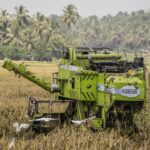
In the heart of global agriculture, where the sun meets fertile earth and the promise of nourishment takes root, rice stands as one of the world’s most essential staple crops. For centuries, the delicate balance of planting, tending, and harvesting this versatile grain has defined the livelihoods of millions. Tho, as we navigate through a rapidly changing world—marked by climate challenges and a growing population—the traditional methods of rice cultivation face unprecedented pressures. Enter the age of innovation: where cutting-edge machinery is not just a luxury but a necessity. In this article, we explore how modern rice machinery is revolutionizing harvest processes, enhancing efficiency, and improving yields. Join us as we delve into the transformative technologies that are redefining what it means to cultivate this vital crop and shaping the future of agricultural practices around the globe.
Advancements in Rice Machinery and Their Impact on Yields
Recent years have witnessed an impressive surge in the technological innovations surrounding rice farming machinery, significantly transforming the production landscape. With the integration of precision farming tools, such as GPS-guided tractors and autonomous harvesters, farmers can now optimize their operations to address the challenges of climate variability and labor shortages. These advancements equip producers with the ability to monitor crop health in real-time, thus enabling more informed decision-making related to irrigation, fertilization, and harvesting schedules. As an inevitable result, farmers can achieve higher efficiency and reduce input costs, paving the way for better economic returns.
Additionally, the evolution of rice machinery has ushered in a new era of sustainability within the agricultural sector. Manny contemporary machines are engineered to minimize environmental impact by utilizing eco-amiable technologies and emphasizing energy efficiency. As a notable example, the introduction of multi-functional harvesting machines allows farmers to perform several tasks, including planting, irrigation, and harvesting, with a single piece of equipment.This not only cuts down on fuel consumption but also reduces the carbon footprint associated with rice production. Furthermore, advancements in machinery durability and automation contribute to a significant increase in yield, thereby sustaining global food security amidst a growing population.
| type of Machinery | Benefits | impact on Yields |
|---|---|---|
| GPS-guided Tractors | Enhanced precision | Up to 10% increase |
| Autonomous Harvesters | Reduced labor costs | 15% yield improvement |
| Multi-functional Machines | Versatility | Overall yield boost of 20% |

Sustainable Practices Through Innovative Harvest Technology
The birth of advanced rice machinery has initiated a transformative journey toward sustainability in agriculture. With rising environmental concerns, manufacturers are increasingly designing equipment that not only enhances productivity but also minimizes ecological footprints. The integration of precision agriculture technology allows farmers to tailor their methods to the specific needs of their crops, reducing waste and resource consumption. These innovations encompass:
- Smart Harvesters: Equipped with sensors to assess crop health and optimize harvesting times.
- Energy-Efficient Designs: Machines that require less fuel and generate fewer emissions.
- Automated Systems: Reducing labor costs while enhancing accuracy and efficiency.
Moreover, the convergence of robotics and agricultural practices is paving the way for more sustainable approaches. As a notable example, innovations like robotic weeding and data analytics are helping farmers make informed decisions and reduce chemical inputs. These technological advancements can be summarized in the following table, highlighting the key benefits:
| Technology | Benefit |
|---|---|
| Robotic Harvesters | Increased efficiency while reducing labor costs |
| Precision Application | Decreased chemical usage, targeting only necessary areas |
| data Integration | Real-time insights for improved crop management |
As the agricultural landscape continues to evolve, the commitment to sustainability through innovative machinery becomes increasingly critical. By harnessing these advanced technologies, farmers can cultivate rice more efficiently while nurturing the environment, achieving a delicate balance that ensures food security for the future.
Enhancing Efficiency: Integrating Mechanization in rice Cultivation
In the quest for higher productivity and sustainability,the integration of mechanization has transformed the landscape of rice cultivation.Farmers are increasingly adopting contemporary machinery to streamline operations, resulting in reduced labor costs and improved yield quality. Automatic transplanting machines, as an example, minimize the labor-intensive task of manually transplanting seedlings, thus optimizing time and resources. Other key tools include:
- Harvesters: These machines significantly cut down harvesting time while ensuring minimal grain loss.
- Rotary tillers: They prepare the land more efficiently than traditional plowing methods.
- Irrigation systems: Automated setups help manage water resources effectively, which is crucial in rice cultivation.
moreover,the synergy between technology and agriculture fosters innovative solutions tailored to local conditions. With real-time data analytics from machinery, farmers can make informed decisions on input application such as fertilizers and pesticides. This precision enhances resource management while ensuring that environmental impacts are mitigated. A glimpse into common mechanization benefits can be seen in the following table:
| Benefits of Mechanization | Impact on rice Cultivation |
|---|---|
| Increased Efficiency | Reduces operational time by up to 40% |
| Cost Reduction | decreases in labor costs and resource waste |
| Higher Yield Quality | Promotes uniformity in grain size and quality |
Future-Proofing the Industry: Training and Support for Farmers
As agriculture evolves at a breakneck pace, empowering farmers with the right skills and knowledge becomes paramount. Aligning training programs to the specific needs of rice production can significantly enhance both yield and efficiency. By offering hands-on workshops and online courses, agribusinesses can equip farmers with expertise in operating advanced machinery and adopting innovative agronomic practices. Emphasizing the importance of continuous education, these programs should cover:
- Machinery operation and maintenance
- precision agriculture techniques
- Sustainable farming practices
- Data-driven decision making
Moreover, fostering a robust support network is essential for assisting farmers as they navigate new technologies and practices. Establishing mentorship opportunities where seasoned farmers share their experiences can create a wealth of knowledge that is easily transferable. To solidify this support, implementing a community-driven platform focused on collaboration could provide:
| Support Features | Benefits |
|---|---|
| Peer-to-peer learning | Encourages knowledge sharing and experience exchange |
| Access to experts | Facilitates guidance on problem-solving and efficiency improvements |
| Networking events | helps build connections and collaborations for future projects |
To Wrap It Up
As we conclude our exploration of the pivotal role rice machinery plays in modern agriculture, it becomes clear that this technology is not merely a tool, but a catalyst for change. From enhancing efficiency to ensuring sustainability, the innovations in rice harvesting equipment represent the intersection of tradition and progress. As we embrace these advancements, we pave the way for a future where food security is no longer a challenge but an achievable goal. The landscape of rice farming is evolving, and with it, the promise of abundance. thus, as we watch the sun rise over the fields, we are reminded that the revolution has only just begun—one grain at a time.