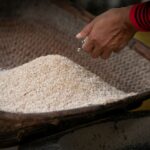
In the heart of agricultural innovation, rice processing serves as a critical gateway, transforming paddy into a staple food enjoyed by billions around the world. As global populations grow and dietary preferences evolve, the demand for efficient, sustainable, and technologically advanced rice processing methods has never been greater. Today, a wave of essential innovations is reshaping how rice is processed, ensuring higher quality, reduced waste, and enhanced nutritional value. From cutting-edge milling machinery to state-of-the-art color sorting systems, these advancements are not just improving yield; they are revolutionizing an industry steeped in tradition. In this article, we delve into the latest breakthroughs in rice processing equipment, exploring how they are not only meeting the needs of today’s consumers but also laying the groundwork for a more resilient and responsible future in food production. Join us as we uncover the transformative technologies that are setting new standards in rice processing and redefining what it means to feed a growing world.
Transforming Efficiency: The Role of Automated Sorting Technologies in Rice Processing
Automated sorting technologies have revolutionized the rice processing industry by introducing a sophisticated yet efficient approach to grain quality assessment. These systems employ a combination of advanced sensors, computer vision, and machine learning algorithms that significantly reduce human error and enhance throughput. By rapidly analyzing the size, color, and texture of rice grains, these technologies ensure that only the highest quality products reach consumers. This not only boosts the overall quality of the processed rice but also minimizes the time and labor involved in manual sorting.
Furthermore, the integration of automated sorting systems leads to improved supply chain dynamics. Farms and processing units equipped with these innovations can enhance their operational efficiency and reduce waste. Important benefits include:
- Increased speed: Automation accelerates the sorting process, allowing for higher volumes of rice to be processed in less time.
- Consistency: Automated systems maintain uniform quality control, delivering a reliable product every time.
- Cost-effectiveness: By decreasing labor costs and minimizing losses, these technologies yield a higher return on investment.
- Environmental benefits: With less waste generated during sorting, the impact on landfills and resources is substantially reduced.
The evolution of these automated systems is marked by continuous improvements and adaptations. Several key features distinguish the latest technologies:
| Feature | Description |
|---|---|
| AI Integration | Utilizes artificial intelligence for enhanced decision-making in real-time sorting. |
| Multi-Spectral Imaging | Employs various wavelengths to detect impurities and quality differences |
| User-friendly Interfaces | Simplifies operation and monitoring, making management easier for staff. |
As rice processing technology continues to evolve, automated sorting will likely play an expanding role in meeting global demand for high-quality rice while enhancing sustainability in the agricultural sector.
Enhancing Quality: Innovations in Milling Techniques for Superior Grain Output
The evolution of milling techniques has revolutionized the rice processing industry, setting new benchmarks for efficiency and quality. Modern equipment is designed to retain the integrity of the grain while maximizing output, ensuring that every step from harvesting to packaging is optimized. Innovations such as laser sorting technology and vacuum packaging systems are at the forefront, offering enhanced precision in separating high-quality grains from the undesirable ones. The use of automated milling controls allows for consistent grain quality, significantly reducing waste and improving yield during the milling process.
Furthermore, advancements in energy-efficient milling systems are helping processors minimize their carbon footprint while maintaining high production levels. These systems include features like smart monitoring and adaptive learning algorithms that analyze processing metrics in real-time, enabling mills to fine-tune operations and conserve energy without compromising quality. Additionally, the integration of biodegradable materials in packaging reflects a sustainable approach to rice distribution, catering to the eco-conscious consumer while ensuring product freshness. Together, these innovations are shaping a future where superior grain output meets the demands of an ever-changing market.
Sustainability in Action: Eco-Friendly Practices and Equipment in Rice Processing
Implementing eco-friendly practices in rice processing not only enhances sustainability but also improves the quality of the final product. One of the current innovations is the use of biodegradable packaging materials for rice products. This helps significantly reduce plastic waste and encourage responsible consumer choices. Additionally, modern mills are adopting solar-powered equipment, which harnesses renewable energy, thereby minimizing greenhouse gas emissions. Techniques such as water-efficient milling are becoming the norm, where advanced machinery uses less water without compromising the quality of the rice. As these technologies evolve, they demonstrate how ingenuity can be paired with environmental responsibility.
To further emphasize sustainable operations, rice processing plants are increasingly incorporating waste valorization techniques. By repurposing by-products like husk and bran, these practices not only contribute to waste reduction but also create additional revenue streams. For instance, husk can be converted into biofuel or fertilizer, and bran can be processed into health supplements. Below is a concise overview of some notable eco-friendly practices:
| Eco-Friendly Practice | Description |
|---|---|
| Biodegradable Packaging | Reduces plastic waste in the environment |
| Solar-Powered Equipment | Utilizes renewable energy to lower emissions |
| Water-Efficient Milling | Minimizes water use while ensuring quality |
| Waste Valorization | Transforms by-products into valuable resources |
Future-Proofing Production: Integrating Smart Technology for Data-Driven Decision Making
In the realm of rice processing, leveraging smart technology is no longer a luxury; it’s an essential strategy for maintaining competitiveness and efficiency. By incorporating IoT sensors, machine learning algorithms, and automation systems, producers can gather real-time data on various operational parameters. This integration allows for enhanced monitoring of supply chain activities and production processes. Producers can identify trends, predict challenges, and optimize workflows with data-driven insights, ultimately reducing waste and maximizing yield. Key aspects of smart technology integration include:
- Predictive Maintenance: Utilizing sensors to forecast equipment failures before they occur, minimizing downtime.
- Quality Control: Implementing vision systems to ensure that only the highest quality grains are processed.
- Energy Management: Employing smart grid connections to reduce energy consumption during peak hours.
Moreover, equipping rice processing facilities with smart analytics can transform raw data into actionable insights, fostering a culture of continuous improvement. By employing dashboards that visualize performance metrics, managers can make informed decisions promptly. Furthermore, automating repetitive tasks not only boosts productivity but also enables personnel to focus on strategic initiatives. A simple overview of how these technologies enhance rice processing can be summarized in the table below:
| Technology | Benefit |
|---|---|
| IoT Sensors | Real-time monitoring and data collection |
| Machine Learning | Predictive analytics for performance optimization |
| Automation Systems | Increased productivity and reduced labor costs |
Key Takeaways
As we draw the curtain on our exploration of essential innovations in rice processing equipment, it becomes clear that the journey of rice—one of the world’s most vital staples—continues to evolve with technological advancements. From precision milling systems that enhance grain quality to automated sorting machines that ensure consistency, these innovations are not just reshaping the industry; they are redefining how rice nourishes billions across the globe.
As consumers increasingly demand sustainability and quality, the future of rice processing equipment lies in blending tradition with technology. The embrace of smart technologies and eco-friendly practices promises not only improved efficiency but also a commitment to preserving our environment for generations to come.
In this ever-changing landscape, it is vital for stakeholders—from farmers to manufacturers—to stay informed and adaptable. As we look forward, embracing these innovations will not only elevate the quality of one of our oldest food sources but also fortify the communities that rely on it. Thus, the legacy of rice processing is not merely in its past, but rather in the exciting potential that lies ahead. Let us cultivate this potential together, as we harvest the benefits of progress.